<< Prev Page 3 of 3 Ahead of a two-car assault at Le Mans later in the season, the second Howmet was campaigned in several SCCA races. At Huntsville Heppenstall won both the preliminary and feature races; a feat repeated a week later at Marlboro by Thompson. Both cars were entered at the Watkins Glen World Championship round. The two machines completed the six-hour event and the Thompson and Heppenstall driven example finished 3rd overall and first in the three-litre class.
The two cars were dispatched to Le Mans, both fitted with a bump on the roof to deflect bugs and debris away from the engine intake. The Le Mans regulations dictated that the engine had to be stopped during pit-stops. This caused big problems for the Howmet team as the turbine engine could not start up when hot. The mechanics tried to cool the engine with ice during the stops but the turbine in the Heppenstall / Thompson entry was nevertheless damaged. This limited them to 100 mph down the Mulsanne Straight. Thompson eventually ended the race prematurely by rolling the car at Indianapolis.
Dibley piloted the sister car, partnered by Bob Tullius. Their car had a broken hub very early in the race. After a lengthy pit-stop the Howmet TX was sent back out. Having lost three hours, the team struggled to make up time through the night. Unfortunately the car had not completed enough laps at the Sunday morning checkpoint and was disqualified. With both cars out before the halfway mark, the season that started off with so much promise, ended with a very poor result.
The Howmet Corporation had already received the much desired media coverage before the TX had even turned a wheel and despite the promising results decided to withdraw from racing. Sadly the innovative Howmets were never raced again and the dominance of the piston engine has continued to this day. Heppenstall did set several turbine world records in August with a re-bodied, open version of the second Howmet TX.
Fortunately both cars have survived and have been restored to running order in recent years. The biggest problem was finding the correct Continental engine. For one car a more common Allison was modified and fitted with the dual waste-gates. It is lighter still and slightly more powerful. During the restoration of this car, Bob McKee used a spare chassis to build a third Howmet. This one does not feature the waste-gates that are needed to make the car fully functional. << Prev Page 3 of 3

 Ultimatecarpage.com
> Cars by brand
> United States
> Howmet
Ultimatecarpage.com
> Cars by brand
> United States
> Howmet
 Racing cars
> Other Sportscars
Racing cars
> Other Sportscars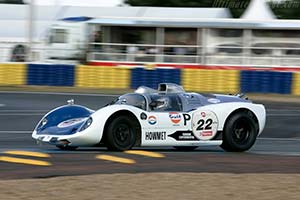
 Ahead of a two-car assault at Le Mans later in the season, the second Howmet was campaigned in several SCCA races. At Huntsville Heppenstall won both the preliminary and feature races; a feat repeated a week later at Marlboro by Thompson. Both cars were entered at the Watkins Glen World Championship round. The two machines completed the six-hour event and the Thompson and Heppenstall driven example finished 3rd overall and first in the three-litre class.