<< Prev Page 3 of 3 If the financial problems were not enough to cancel Talbot Darracq's Grand Prix program, yet another rule change sure was. After just two years the 1.5 litre formula was abandoned and replaced by a 'Formula Libre' class, which effectively ended Grand Prix racing for the time being. Bertarione used his Italian connections and sold all three cars to Emilio Materassi. He formed the first private racing team; the Scuderia Materassi. He not only successfully raced the Talbots, but also inspired one Enzo Ferrari to set up his own team. The cars were slightly revised from the 1927 specification with new friction dampers that also served as racing's first radius arms. These might have been supplied by Bertarione during the sale of the cars.
Scuderia Materessi prepared the cars for the likes of Cremono Arcangeli, Count Gastone Brilli-Peri and Tazio Nuvolari, and of course for Materassi himself. The cars dominated the 1500 class at every event and at times managed to score overall wins. The only Formula Libre Grand Prix held was the 1928 Italian/European Grand Prix held at Monza. Sadly Materassi was involved in what would be the most deathly accident ever in Grand Prix racing, killing himself and 22 spectators. The surviving cars continued to be fielded by the Scuderia for another season, again with a lot of success. Around the turn of the decade the cars and all the spares were sold to Italian racer Enrico Platé. He continued to race the Talbot Darracq Grand Prix cars for many seasons and applied a wide variety of modifications. Eventually both the body and chassis were replaced, but the running gear was retained.
While the 1926/1927 Delage has gone into history as one of the great Grand Prix designs, the Talbot Darracq has almost been forgotten. It is a shame that financial problems prevented the Becchia and Betarione design to live up to its potential. With its exceptional low chassis and off-set engine, it paved the way for a whole generation of front-engined Grand Prix cars. Ironically, the Delage only started to work well in 1927 after having adopted the off-set layout pioneered by Talbot Darracq. Fortunately the featured machine has been brought back to its original specification, so we can still admire the exceptional design and craftsmanship of the men at the Suresnes factory. << Prev Page 3 of 3

 Ultimatecarpage.com
> Cars by brand
> France
> Talbot Darracq
Ultimatecarpage.com
> Cars by brand
> France
> Talbot Darracq
 Racing cars
> Pre 1950 GP
Racing cars
> Pre 1950 GP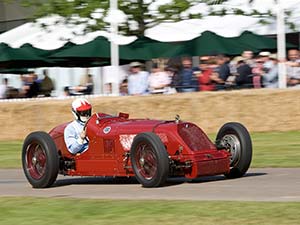
 If the financial problems were not enough to cancel Talbot Darracq's Grand Prix program, yet another rule change sure was. After just two years the 1.5 litre formula was abandoned and replaced by a 'Formula Libre' class, which effectively ended Grand Prix racing for the time being. Bertarione used his Italian connections and sold all three cars to Emilio Materassi. He formed the first private racing team; the Scuderia Materassi. He not only successfully raced the Talbots, but also inspired one Enzo Ferrari to set up his own team. The cars were slightly revised from the 1927 specification with new friction dampers that also served as racing's first radius arms. These might have been supplied by Bertarione during the sale of the cars.