
 Ultimatecarpage.com
> Cars by brand
> Italy
> Ferrari
Ultimatecarpage.com
> Cars by brand
> Italy
> Ferrari
 SF90 XX Spider SF90 XX Spider
|
| Ferrari SF90 XX Spider |
| Article | Image gallery (9) | Specifications |
|
|
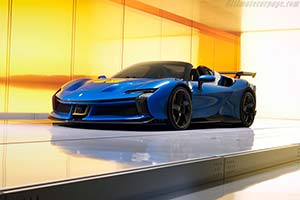
<< Prev Page 3 of 3  The guiding principle of the SF90 XX Stradale’s interior design was highlighting the cockpit’s racing vocation through solutions that would provide significant weight-savings. The main areas involved were the door panels, tunnel and mats, which are now simpler in terms of their shape and the mainly technical fabrics used, while carbon-fibre was used for functional areas. The upper part of the dashboard is trimmed in Alcantara®, while the lower part is trimmed in technical fabric. Both are inspired by the racing world. The guiding principle of the SF90 XX Stradale’s interior design was highlighting the cockpit’s racing vocation through solutions that would provide significant weight-savings. The main areas involved were the door panels, tunnel and mats, which are now simpler in terms of their shape and the mainly technical fabrics used, while carbon-fibre was used for functional areas. The upper part of the dashboard is trimmed in Alcantara®, while the lower part is trimmed in technical fabric. Both are inspired by the racing world.The door panels emphasise the theme seen aboard the SF90 Stradale: the concave sections that converge on the dashboard are highlighted by the colour contrast. The three louvres in the middle zone, on the other hand are a nod to the air vents on the wheel arch, creating an overall dynamic, sculptural effect. The three apertures, which reference the exterior language, also seamlessly integrate technical and control functions, in a completely new stylistic interpretation. The pared-back central tunnel not only looks, but is exceptionally light. It is dominated by the gear shift gate which is located now centrally and more forward on the tunnel compared to the SF90 Stradale. The window lifters and the key compartment are on a secondary level. The styling theme is characterised by volumes that create a sophisticated combination of functional voids and structural solids, lending the tunnel a sporty yet sophisticated appeal while still highlighting its functionality. A specific racing seat with a visible carbon-fibre tubular structure and cushion supports was designed for the car to enhance sporty driving pleasure without compromising on comfort. The backrest rake mechanism has been integrated into the seat using elastic trim materials which hide the separation between the backrest and seat squab. This means that the structure looks seamless at all times – just like a single-piece seat while also allowing the backrest to be adjusted. Together with the carbon-fibre structure, this feature saved 1.3 kg in weight compared to the SF90 Stradale’s single-piece seat. The SF90 XX Spider allowed the Ferrari Styling Centre to use the modifications made to the rear of the car to create an instantly recognisable architecture in which the flying buttress, a much-loved part of Ferrari tradition, seamlessly melds with the arrow theme of the front. The resulting visual effect extends the body forwards and lending it a completely different connotation to the SF90 XX Stradale. The car’s centre of gravity thus appears to be lower too, particularly from the side. This is not just because of the roof, which has a wraparound windscreen that seamlessly melds with the side windows, but also because the flying buttresses are lower than on the SF90 XX Stradale. Although the roll-bars protrude from the rest of the bodywork when the roof is lowered, the fact that they are carbon-fibre means they don’t sully the broad, squat look created by the flying buttresses. This in turn enhances the visual lowering of the car’s volume. When the roof is up, the roll-bars seamlessly connect to and become one with the roof structure. Like the roll-bars, the top is carbon-fibre and thanks to the renowned Ferrari Retractable Hard Top (RHT) mechanism, can be opened while the car is moving in a mere 14 seconds at a speed of up to 45 km/h, allowing occupants to enjoy the car to the utmost in all kinds of weather. << Prev Page 3 of 3 |
| Article | Image gallery (9) | Specifications |
| All Cars - Contact us - Privacy Statement - Top | © 1998 - 2026 Ultimatecarpage.com |