Page 1 of 1 His Formula 1 designs were never conventional, but when Gordon Murray unveiled his first road car he truly broke convention. Simply dubbed Rocket, the lightweight car is a combination of motorcylce technology with single seater design. Not just the Yamaha engine and gearbox were two-wheeler derived, but also the unique tandem seating position. This allowed Murray to construct a single seater, which could seat two people.
A strong steel spaceframe chassis formed the basis for the car. Like a Formula 1 engine, the 20 valve Yamaha unit was used as a fully stressed member. Suspension was simple with double wishbones on both ends. Murray designed a very retro single seater body, which in many ways resembled the Formula Vee cars of the early 1960s. For the body and cycle wing fenders a lot of exotic materials were used to keep the weight down.
With a kerb weight of under 400 kg, the Rocket fully justified the ambitious name. At the time of its launch in 1992, it was one of the fastest accelerating cars in the world. Needless to say, the low weight also contributed to the car's phenomenal agile handling characteristics and incredibly short braking distances. Former racer Chris Craft's Light Car Company was commissioned to construct the car.
In almost every aspect the Rocket was the Lotus Seven of the 1990s, but the one difference was the main reasons for its commercial failure; it was not at all affordable. With a price of close to 40,000 Pounds, the Rocket was twice as expensive as a Caterham or Westfield clone. After 55 cars were completed the production was stopped. Murray's second road car, the McLaren F1, was a considerably bigger success.
Featured is Rocket s/n 003, the first car sold to the public. It is seen here at the 2005 Bonham's Silverstone Classic auction, where it was expected to sell for over 30,000 Pounds, but the offers made failed to meet the reserve set. Page 1 of 1

 Ultimatecarpage.com
> Cars by brand
> Great Britain
> Light Car Company
Ultimatecarpage.com
> Cars by brand
> Great Britain
> Light Car Company
 Rocket
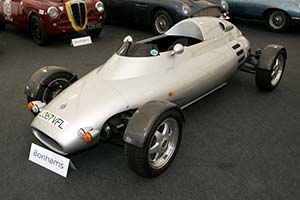
 His Formula 1 designs were never conventional, but when Gordon Murray unveiled his first road car he truly broke convention. Simply dubbed Rocket, the lightweight car is a combination of motorcylce technology with single seater design. Not just the Yamaha engine and gearbox were two-wheeler derived, but also the unique tandem seating position. This allowed Murray to construct a single seater, which could seat two people.