Go to Ultimatecarpage.com

Car search: Quick Advanced 
 sport Ultimatecarpage.com  > Cars by brand  > France  > Talbot Lago
Racing cars  > Other Sportscars
     T150C Competition Roadster
Cars statistics: 5054 cars, 430 makes, 39392 images; Events statistics: 215 reports, 41349 images; Forum statistics: 85,353 members, 41,968 topics; more...


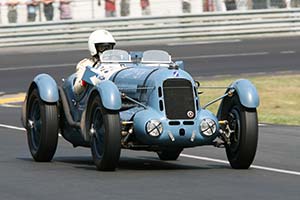
  Talbot Lago T150C Competition Roadster
 

Talbot Lago T150C Competition Roadster Talbot Lago T150C Competition Roadster Talbot Lago T150C Competition Roadster Talbot Lago T150C Competition Roadster Talbot Lago T150C Competition Roadster Talbot Lago T150C Competition Roadster
Click here to save all images    Image credits: Wouter Melissen 

Model history:
Click here to download printer friendly version Shortly after taking full control of the French arm of the Sunbeam-Talbot-Darracq group, Anthony Lago expressed his desire to take his newly formed Talbot Lago brand to the track. He commissioned fellow Italian and Talbot's chief engineer Walter Becchia to create a new dual-purpose sports car that could be used both on the road and track. Work started late in 1935, with the 24 Hours of Le Mans the following year as the objective.

Making the most of a new four-litre class, the existing 'T150' six cylinder engine was enlarged from 2,996cc to 3,994cc. Combining a cast-iron block and an aluminium alloy cylinder head, the revised engine featured hemispheric combustion chambers and three Stromberg carburettors. Becchia experimented with different piston designs, which provided a range of compression ratios from 1:7.8 to 1:9.1. The engine was officially, and perhaps optimistically, rated at 200 bhp but 175 bhp was more realistic with the lowest compression.

Mated to a Wilson pre-selector, four-speed gearbox, the new T150C engine was mounted in a ladder frame chassis. This featured box-section side members connected by tubular cross-sections. Suspension at the front was independent through top links and a transversely mounted leaf spring, while at the rear an underslung live axle was fitted. The competition car was clothed in a very slippery, cycle-wing body. Reducing the drag, the headlights were fitted inside the front suspension shroud.

For the 1936 season, four examples were completed as competition cars. For homologation purposes, additional road car chassis were built, which were very popular with the custom coach-builders and formed the basis for the legendary Figoni & Falaschi Teardrop Coupes. Two of the competition cars were sold to customers, which did receive considerable support from the works team. Unfortunately, the 24 Hours of Le Mans was cancelled due to massive strikes, so instead the new Talbot Lago racers debuted at the French Grand Prix.

During the following years, the cars were extensively raced throughout Europe. From 1937 onwards, two additional chassis were campaigned. Among the many events the T150Cs competed in were the Mille Miglia, 24 Hours of Le Mans and Tourist Trophy. Among the major victories were a win in the 1937 French Grand Prix, the 1937 Tourist Trophy. The cars remained competitive in the post-War era and one even scored a victory at Goodwood as late as 1953.

For 1938, the engine was further developed and enlarged to 4.5 litre. Again various compression ratios were tried, and Becchia eventually settled for 1:8 for reliability reasons. At this ratio, the new 'T26' engine produced 210 bhp. Three of the larger engined T26 SS racers were built, two using renumbered T150C chassis. Following a disappointing Le Mans debut, the biggest win scored by the T26 SS was in the Paris 12 Hours later that year. Along with the smaller engined T150Cs, the T26s were raced for many more years.

Although a victory in the all-important 24 Hours of Le Mans eluded the Talbot Lago team before the War, the foundation laid by the T150C and subsequent T26 SS, did form the basis for wins in Grands Prix and at Le Mans with the T26C in the years after the War. Among the fastest pre-War sports cars, the surviving T150C and T26 SS chassis are today very highly regarded but are nevertheless regularly campaigned in historic events.


Chassis: 82930
Chassis 82930 The first of six T150Cs built, this was one of the customer cars. Soon after the first owner took delivery, it was returned to Talbot Lago. Among the subsequent owners were Luigi Chinetti and René le Beque. In these various hands, the car was extensively campaigned with no fewer than four outings at Le Mans as well as an appearance at the Mille Miglia. After the War, it was re-bodied and continued racing until the fall of 1950. In the 1980s, it was restored to its original configuration, and has since been regularly raced in historic events. Early in 2013, the rare racer was sold at Artcurial's Retromobile sale for close to EUR 1.5 million.

Article by Wouter Melissen, last updated on February 09, 2013

Add your comments on the Talbot Lago T150C Competition Roadster


General specifications
Country of origin France
Chassis number 82930
Numbers built 6
Produced in 1936

Major wins
1937 French Grand Prix (Louis Chiron)

Past Sales

Engine
Configuration Straight 6
Location Front, longitudinally mounted
Construction cast-iron block, alloy head
Displacement 3.994 liter / 243.7 cu in
Bore / Stroke 90.0 mm (3.5 in) / 104.5 mm (4.1 in)
Compression 7.8:1
Valvetrain 2 valves / cylinder, OHV
Fuel feed 3 Stromberg Carburettors
Aspiration Naturally Aspirated
Power 175 bhp / 131 KW @ 4500 rpm
BHP/Liter 44 bhp / liter

Drivetrain
Body aluminium panels
Chassis steel box-section frame
Front suspension wishbones, transverse leaf spring, friction dampers
Rear suspension live axle, semi-elliptic leaf springs, friction dampers
Steering worm-and-nut
Brakes cable operated drums, all-round
Gearbox Wilson preselector 4 speed Manual
Drive Rear wheel drive

Dimensions
Weight 860 kilo / 1896 lbs
Wheelbase / Track (fr/r) 2650 mm (104.3 in) / 1422 mm (56 in) / 1486 mm (58.5 in)

Performance figures
Power to weight 0.2 bhp / kg
Top Speed 215 km/h (134 mph)

Resources
Suggested reading
  • Talbot, des Talbot-Darracq aux Talbot-Lago, by Alain Spitz
Related articles
Useful links