Page 1 of 2 Next >> Errett Lobban (E.L.) Cord dropped out of school at age 15 and took a job as a car salesman, retrospectively much to the appreciation of many car enthusiasts around the world. He proceeded to become a very successful salesman, sure to point out the intimate details of every automobile he could sell. His next job, at a service station in Los Angeles included mechanical work that led to him tinkering with his own Model T's, creating stylish bodies, and modified engines. He jumped back into sales in Chicago shortly after and then his own car distributor company in Milwaukee. His ambition seemed endless as he began searching for a manufacturing company to buy in 1924.
Meanwhile, the Auburn Automobile Company was on the verge of bankruptcy. The Chicago-based venture capitalists currently in control offered Cord a top management position. He quickly replied with a counter-offer: complete control, 20% of profits, and an option to buy the company once it recovered. In their unfavourable economic status, the partners had no choice but to agree.
E.L.'s subsequent unusual marketing tactics made him a fortune leading to his purchase of Duesenberg, a New York shipyard, cab companies, and an aircraft company. His swift success in the transportation business and the stock market at such a young age wasn't left unnoticed, and in turn appreciated by some of the old hands in the money pot. His ingenious financial scheming shone bright in 1932 when he bought a controlling amount of Aviation Corp. stock shortly after they used size and power to buy out his airline company. This put him in control of what became American Airways (now American Airlines). He seemed to have lost his edge in the mid 1930s however. Of course he was not helped by the great depression either, but his efforts to combat it did more bad than good. Page 1 of 2 Next >>

 Ultimatecarpage.com
> Cars by brand
> United States
> Auburn
Ultimatecarpage.com
> Cars by brand
> United States
> Auburn
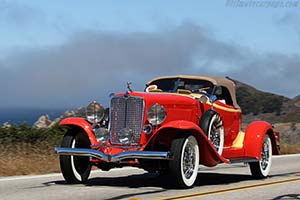
 12-161A Speedster
 Errett Lobban (E.L.) Cord dropped out of school at age 15 and took a job as a car salesman, retrospectively much to the appreciation of many car enthusiasts around the world. He proceeded to become a very successful salesman, sure to point out the intimate details of every automobile he could sell. His next job, at a service station in Los Angeles included mechanical work that led to him tinkering with his own Model T's, creating stylish bodies, and modified engines. He jumped back into sales in Chicago shortly after and then his own car distributor company in Milwaukee. His ambition seemed endless as he began searching for a manufacturing company to buy in 1924.