Page 1 of 2 Next >> Sunbeam Talbot Darracq's chief engineer Louis Coatalen figured the easiest route to Grand Prix racing glory was to employ the most successful designer of the time. This was Swiss engineer Ernest Henry, who had previously been responsible for the engines in the fantastic Peugeot and Ballot racing cars. He was hired in time to develop a Sunbeam Grand Prix car from scratch for the 1922 season. The reason for the clean sheet was a regulation change that saw the maximum engine displacement drop from three to just two liter for the next three seasons.
Henry drew up a long stroke four-cylinder engine with a fixed block and head. Just like on his earlier designs, the head featured two camshafts and four valves per cylinder. Each cylinder was also equipped with twin spark plugs to optimize combustion. Breathing through two Solex carburetors, Henry's new four cylinder engine produced a commendable 88 bhp. Mated to a three speed gearbox, it was mounted in a relatively straightforward ladder frame with underslung solid axles on both ends. The drum brakes used Hispano Suiza patented servo assistance that was driven from the gearbox.
While Henry did most of the design work at the old Darracq works in Suresnes, France, the actual assembly of the new Grand Prix cars was done in the Wolverhampton, England based Sunbeam factory. A total of four cars were completed, draped in very narrow but elegant Grand Prix bodies. One of the more striking features was the spare wheel that was mounted longitudinally in the long tail. Ahead of the all important French Grand Prix in Strasbourg, the first completed example was tested at Brooklands and in the Tourist Trophy race on the Isle of Man. Page 1 of 2 Next >>

 Ultimatecarpage.com
> Cars by brand
> Great Britain
> Sunbeam
Ultimatecarpage.com
> Cars by brand
> Great Britain
> Sunbeam
 Racing cars
> Pre 1950 GP
Racing cars
> Pre 1950 GP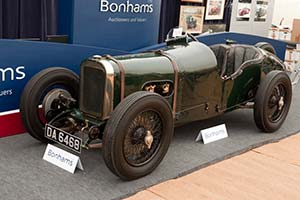
 Sunbeam Talbot Darracq's chief engineer Louis Coatalen figured the easiest route to Grand Prix racing glory was to employ the most successful designer of the time. This was Swiss engineer Ernest Henry, who had previously been responsible for the engines in the fantastic Peugeot and Ballot racing cars. He was hired in time to develop a Sunbeam Grand Prix car from scratch for the 1922 season. The reason for the clean sheet was a regulation change that saw the maximum engine displacement drop from three to just two liter for the next three seasons.