Page 1 of 1 More than a decade after customer engines were first introduced to Formula 1, March further revolutionized the sport in 1970 with the first customer chassis. Of course the likes of Bugatti and Maserati had sold complete Grand Prix cars, but these were then competitive for a number of seasons. By the end of the 1960s, there were so many developments in quick succession that racing car manufacturers had problems enough to construct sufficient chassis for their own team. Although quite successful, the new March F1 car did struggle to remain competitive as the other manufacturers continued developing their racers.
The driving force behind the new manufacturer was lawyer and amateur racing driver Max Mosley. Together with Graham Coaker and Alan Rees he convinced up-and-coming designer Robin Herd of his bold new ideas. All four of them put in an equal amount of capital and the first letters of their last name were shuffled about to form the word March. Mosley ran the financial side of the company and he talked many suppliers into helping the small team get up and running. This enabled the technicians Herd and Rees to get the production going. There was plenty of ambition as for their first season F1, F2, F3 and Can-Am cars were developed.
Herd's first Formula 1 design for March was very conventional, but Peter Wright's aerodynamics certainly were not. It goes without saying that the aluminium monocoque was intended to take the then readily available Cosworth DFV. A sign of things to come much later in the decade were the fuel tanks fitted on both sides of the cockpit. They had the shape of upside down wings and could be considered the first ground effects devices. Wright would later move to Lotus, where he helped to kick-start the ground effects revolution. The completed package was simply dubbed 701 after its year of construction and class; the F2 car was know as the 702, etc.
One of March's first clients was Ken Tyrrell, who had just severed his ties with Matra and was looking for a new F1 racer. With him came World Champion Jackie Stewart. In total 11 cars were constructed for that season including several Works cars. The March 701 had a dream debut as in the first four races, three victories were scored, with Stewart's Spanish Grand Prix win the only one counting for the Championship. Sadly the March gradually lost touch as the competition continued to develop their machines. Halfway through the season, the March was seriously off pace. It also did not help that Stewart replaced his March for the first Tyrrell. After Mosley's hype and stellar debut, a third in the manufacturer's championship was quite disappointing in the end.
Although Rees and Coaker left the company, March continued to produce some very quick and quirky racing cars, but they were never able to compete on the highest level for an entire season. Page 1 of 1

 Ultimatecarpage.com
> Cars by brand
> Great Britain
> March
Ultimatecarpage.com
> Cars by brand
> Great Britain
> March
 Racing cars
> Formula 1
Racing cars
> Formula 1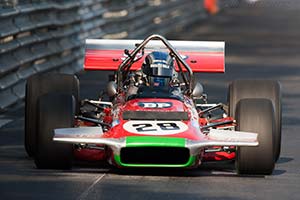
 More than a decade after customer engines were first introduced to Formula 1, March further revolutionized the sport in 1970 with the first customer chassis. Of course the likes of Bugatti and Maserati had sold complete Grand Prix cars, but these were then competitive for a number of seasons. By the end of the 1960s, there were so many developments in quick succession that racing car manufacturers had problems enough to construct sufficient chassis for their own team. Although quite successful, the new March F1 car did struggle to remain competitive as the other manufacturers continued developing their racers.