<< Prev Page 2 of 2 During the 1988 season, Williams had commenced testing with a slightly modified and Renault engined FW12B. Over the winter, the design was further refined and morphed into the FW12C with which the team would start the 1989 season. The newly developed Renault V10 had a 67° V-angle and was quite a bit more powerful than the Judd engine used the previous year. The prospect of racing a Renault engined car was not enough for Nigel Mansell to turn down an offer from Ferrari. his replacement was Belgian Thierry Boutsen.
With turbo engines banned, the FW12C now had a level playing field and Patrese immediately qualified second on the grid for the season opener. He also set the fastest lap but was ultimately forced to retire. He then finished second three races in a row and, crucially, Boutsen won the third of these, the Canadian Grand Prix. Before the end of the year, Williams introduced the purpose-built FW13 with which Boutsen won another race.
It was a promising start of what would become a hugely successful partnership, which would result in four Drivers' titles during the 1990s. Ironically the first of these would be with returnee Nigel Mansell behind the wheel. Particularly the FW12C played a vital role to ensure the Williams/Renault tie-up would be a success. Williams built ten FW12s, three of which were updated to FW12C specification while two brand-new cars were constructed cars for the 1989 season. << Prev Page 2 of 2

 Ultimatecarpage.com
> Cars by brand
> Great Britain
> Williams
Ultimatecarpage.com
> Cars by brand
> Great Britain
> Williams
 Racing cars
> Formula 1
Racing cars
> Formula 1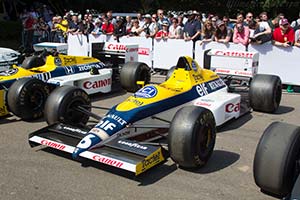
 During the 1988 season, Williams had commenced testing with a slightly modified and Renault engined FW12B. Over the winter, the design was further refined and morphed into the FW12C with which the team would start the 1989 season. The newly developed Renault V10 had a 67° V-angle and was quite a bit more powerful than the Judd engine used the previous year. The prospect of racing a Renault engined car was not enough for Nigel Mansell to turn down an offer from Ferrari. his replacement was Belgian Thierry Boutsen.