<< Prev Page 3 of 3 Behind the scenes things were changed considerably for Le Mans. After three consecutive wins Audi and their partners Joest decided to leave racing the R8s mostly to privateers. This freed up resources and drivers for the Bentley program. The most visible element of this increased interest was the addition of Rinaldo Capello and Tom Kristensen to the Bentley driver line-up. They were paired with Guy Smith in the Joest run #7 car while Johnny Herbert, David Brabham and Mark Blundell raced the 'British' #8 car, which was run by RTN. Overseeing the all-star effort was Le Mans legend Derek Bell, who had been involved with the project from the very beginning.
The two Bentleys could be easily distinguished as the #7 car featured deep end plates on the rear wing, while the #8 Speed 8 sported more conventional end plates. The two different configurations yielded virtually identical lap times; the former produced a little more downforce while the latter resulted in less drag. The Speed 8s qualified first and second for the race and dominated from start to finish. An electrical problem saw the 'British' Bentley lose two laps, handing the win to the #7 car driven by Capello, Kristensen and Smith. The closest rival, a Champion entered Audi R8, finished a further three laps down from the second placed #8 Bentley.
The Bentley team had achieved their desired objective and retired from racing immediately after the 2003 Le Mans race. That was probably the single biggest let down of the whole program. Even though the Speed 8 had won at Le Mans in convincing fashion, it was not allowed to join the ranks of legendary sports racing cars. Another win at Le Mans and victories in events like the Sebring 12 Hours and Petit Le Mans would have promoted the Bentley to that level. Hopefully we do not have to wait another 70 years before the Bentley marque will be represented on the racing track again. << Prev Page 3 of 3

 Ultimatecarpage.com
> Cars by brand
> Great Britain
> Bentley
Ultimatecarpage.com
> Cars by brand
> Great Britain
> Bentley
 Racing cars
> LMP
Racing cars
> LMP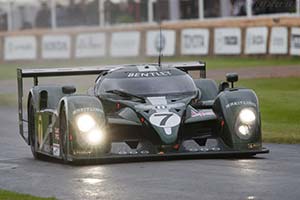
 Behind the scenes things were changed considerably for Le Mans. After three consecutive wins Audi and their partners Joest decided to leave racing the R8s mostly to privateers. This freed up resources and drivers for the Bentley program. The most visible element of this increased interest was the addition of Rinaldo Capello and Tom Kristensen to the Bentley driver line-up. They were paired with Guy Smith in the Joest run #7 car while Johnny Herbert, David Brabham and Mark Blundell raced the 'British' #8 car, which was run by RTN. Overseeing the all-star effort was Le Mans legend Derek Bell, who had been involved with the project from the very beginning.