<< Prev Page 2 of 2 With the French and British racing ban still in place in 1920, almost all motor races that season took place in the United States. Most of these races were held on oval tracks, with the Indy 500 being the most important. In practice the Ballots were the fastest of the lot, but bad luck saw the race victory go to a four-cylinder engined Monroe. The Duesenbergs were on the pace, but were also struck by bad luck, finishing third, fourth and sixth. In one of the rare road races of the season at Elgin Illinois, the Ballot of Ralph de Palma dominated the race.He was helped a great deal by driving the only Ballot in the field with front brakes, fitted especially for the race.
In the 1921 running of the Indy 500, both Ballot and Duesenberg were again surprised by an outsider. Second was the best Duesenberg could manage. The ban was now lifted and the teams moved to France for the Grand Prix at Le Mans. This would be the first Grand Prix since the outbreak of the War. Everyone in France expected the Ballot to take the home victory, being under the false impression that the American teams had experience with oval racing only. To compete with the quad-brake Ballots, Duesenberg modified their racers by fitting drums all around. These were not the traditional cable operated drums, but for the first time in racing history, four hydraulically operated drums were fitted on a racer.
Duesenberg was the first American manufacturer to enter a Grand Prix. The Americans quickly silenced the home-crowd by lapping as quick as the Ballots in qualifying. In the race, it looked like a battle between the Ballot and Duesenberg teams, but the poor road surface made the race very unpredictable. The stress of cars racing on it at high speeds shredded the surface to pieces, sharp pieces. With only two laps to go, most of the Ballots were out due to the degrading track conditions. Jimmy Murphy's Duesenberg was leading until he was also struck by track debris, shredding one tire and piercing the radiator. The race seemed over for the leading Duesenberg.
Murphy nurtured the heavily smoking racer into the pits, to get more water to cool the overheating engine. To the surprise of many of the spectators, Murphy, reluctant to give up, set out again. He carefully piloted the car on the final 10.6 mile laps, to take the victory with an average speed of 78.1 mph. It was the first Grand Prix win for an American team, which didn't repeat until the 1960s. After this epic victory, Duesenberg focussed more on racing in the States and the construction of some of the finest road cars of the era. Murphy's victory was one of the automaker's finest moments, together with the 1922 and 1924 wins at the Indy 500.
The Grand Prix and double Indy winning machine is today part of the Indianapolis Hall of Fame Museum. It is pictured above during a rare outing at the 2007 Goodwood Festival of Speed. << Prev Page 2 of 2

 Ultimatecarpage.com
> Cars by brand
> United States
> Duesenberg
Ultimatecarpage.com
> Cars by brand
> United States
> Duesenberg
 Racing cars
> Pre 1950 GP
Racing cars
> Pre 1950 GP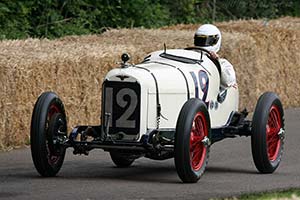
 With the French and British racing ban still in place in 1920, almost all motor races that season took place in the United States. Most of these races were held on oval tracks, with the Indy 500 being the most important. In practice the Ballots were the fastest of the lot, but bad luck saw the race victory go to a four-cylinder engined Monroe. The Duesenbergs were on the pace, but were also struck by bad luck, finishing third, fourth and sixth. In one of the rare road races of the season at Elgin Illinois, the Ballot of Ralph de Palma dominated the race.He was helped a great deal by driving the only Ballot in the field with front brakes, fitted especially for the race.