<< Prev Page 3 of 3 AMG Mercedes did go to Le Mans this time round and brought a revised version of the CLK 'inspired' GT1 racer. Aptly dubbed the CLK-LM, it featured a five-litre V8 engine that was, above all, considerably lighter than the larger V12. Based on the 1989 Le Mans-winning engine, it was also believed to be more reliable than CLK-GTR engine. The V8 was fitted with larger restrictors, so it produced similar horsepower figures as the larger V12. The aero-package was also revised to meet the specific needs of the high-speed track. The nose and roof were both lowered, reducing the drag considerably.
The modifications showed their worth immediately as the two cars entered set the fastest and third times during qualifying. The race quickly turned into a disaster with the engines in both CLK-LMs failing before the four-hour mark. Ironically the race was won by Porsche's GT1 racer, which could not match the CLK-GTRs in the first two races. After Le Mans, AMG Mercedes returned to the FIA GT Championship with the CLK-LM. The teamed cleaned up the championship, winning all of the eight remaining races. Fittingly Klaus Ludwig won his final race for Mercedes-Benz at Laguna Seca together with Ricardo Zonta. The two relieved Schneider as champion.
For many it came as no surprise that the GT1 cars were banned from the FIA GT Championship for 1999. With all eyes now on Le Mans, Mercedes-Benz commissioned AMG to built an all new racing car to challenge for the outright win. Dubbed the CLR, it proved to be quick but hugely unstable and flipped three times at high speeds. The surviving car was withdrawn from the race and Mercedes-Benz Motorsport chief Norbert Haug vowed never to return to Le Mans. Despite dominating the FIA GT championship for two seasons, the three-year program will forever be remembered by the two disastrous outings at Le Mans. << Prev Page 3 of 3

 Ultimatecarpage.com
> Cars by brand
> Germany
> Mercedes-Benz
Ultimatecarpage.com
> Cars by brand
> Germany
> Mercedes-Benz
 CLK-GTR Roadster
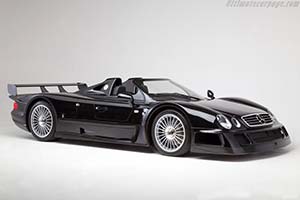
 AMG Mercedes did go to Le Mans this time round and brought a revised version of the CLK 'inspired' GT1 racer. Aptly dubbed the CLK-LM, it featured a five-litre V8 engine that was, above all, considerably lighter than the larger V12. Based on the 1989 Le Mans-winning engine, it was also believed to be more reliable than CLK-GTR engine. The V8 was fitted with larger restrictors, so it produced similar horsepower figures as the larger V12. The aero-package was also revised to meet the specific needs of the high-speed track. The nose and roof were both lowered, reducing the drag considerably.