
| gt |
 Ultimatecarpage.com
> Cars by brand
> United States
> Chevrolet
Ultimatecarpage.com
> Cars by brand
> United States
> Chevrolet
 Racing cars
> GT Cars Corvette C7.R Racing cars
> GT Cars Corvette C7.R
|
| Chevrolet Corvette C7.R |
| Article | Image gallery (43) | Specifications | Video (1) |
|
|
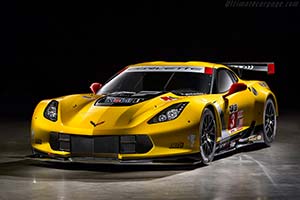
<< Prev Page 3 of 3  The aerodynamic strategies of the Corvette Stingray came directly from the Corvette C6.R - including the forward-tilted radiator, functional hood and front-quarter panel vents, and rear transmission and differential cooling intakes. The aerodynamic strategies of the Corvette Stingray came directly from the Corvette C6.R - including the forward-tilted radiator, functional hood and front-quarter panel vents, and rear transmission and differential cooling intakes.The Z06 and C7.R take that aerodynamic foundation to the next level, sharing aggressive strategies for increased cooling and aerodynamic downforce, including similar front splitters, rocker panels, and front- and rear-brake cooling ducts. "We worked concurrently with the race team developing the aerodynamic packages for the Z06 and the C7.R," said Juechter. "We even used the same modeling software to test both cars, enabling us to share data and wind-tunnel test results. As a result, the aerodynamics of the production Z06 produce the most downforce of any production car GM has ever tested, and we are closing in on the aero performance of a dedicated race car." There are, of course, differences between the race car and production Corvette Z06. For example, the C7.R carries over the powertrain for the C6.R, as the GT rules limit the maximum displacement to 5.5L, and prohibit forced induction. By comparison, the new Z06 boasts a supercharged 6.2L engine estimated at 625 horsepower. Both engines, however, are based on the historic small block architecture. The suspension on the C7.R is modified to accommodate wider racing tires and larger brakes, again part of the GT regulations. On the aerodynamic side, one major difference is the shift away from U.S. National Advisory Committee for Aeronautics, or NACA, ducts on the C7.R. The C6.R used two NACA ducts, on top of the rear bodywork and near the position of the rear wheels, for cooling. For the new C7.R, there are now openings on each of the rear quarter panels, above the brake ducts, which will draw air to help cool the race car's transaxle and differential. Additionally, one of the primary results of the C7.R's aero detail is making the rear wing a more-significant part of the car's aero package. A larger radiator inlet has the added benefit of generating smoother airflow over the rear wing and making its use more efficient to the handling and stability of the race car at high speed. << Prev Page 3 of 3 |
| Article | Image gallery (43) | Specifications | Video (1) |
| All Cars - Contact us - Privacy Statement - Top | © 1998 - 2026 Ultimatecarpage.com |