<< Prev Page 2 of 2 For 1973, Ligier received backing from Citroën, allowing the aerodynamics to be further developed. Over the winter, the car evolved into a true silhouette racer with a deep air-dam, wider wheel arches and a tall rear wing. At Le Mans, the Maserati engine once again proved the weakest link of the effort, prompting early retirements for both works cars. At the Tour de France, later in the season, the JS2 really came into its own, winning 14 of the 17 stages. Sadly a distributor failure ultimately robbed Gérard Larousse and Guy Chasseuil from victory.
Refinished in Total colours, the JS2s returned to the fore in 1974. Chasseuil started off with a great victory in the Le Mans 4 Hours. The expanded works program saw Ligier compete in most rounds of the World Championship but with limited success due to reliability issues and accidents. Jacques Laffite and Alain Serpaggi did manage to finish a credible eighth at Le Mans. At the end of the 1974 season, Larousse did manage to get vindication in the Tour de France, scoring a well deserved victory ahead of the sister car.
Going into their fourth season, the two works Ligier JS2s were equipped with the altogether more powerful Cosworth DFV V8 engine, which was good for 460 bhp. Prompted by the withdrawal of Matra, the main objective in 1975 was an outright victory at Le Mans. Jean-Louis Lafosse and Chasseuil came very close and were involved in a race-long battle with Derek Bell and Jacky Ickx in the Mirage that would ultimately claim victory by a single lap. This would be the final outing for the JS2, as Ligier had set its sights on F1. << Prev Page 2 of 2

 Ultimatecarpage.com
> Cars by brand
> France
> Ligier
Ultimatecarpage.com
> Cars by brand
> France
> Ligier
 Racing cars
> Other Sportscars
Racing cars
> Other Sportscars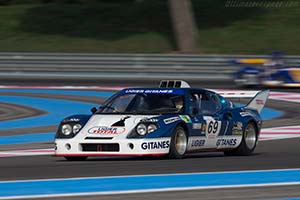
 For 1973, Ligier received backing from Citroën, allowing the aerodynamics to be further developed. Over the winter, the car evolved into a true silhouette racer with a deep air-dam, wider wheel arches and a tall rear wing. At Le Mans, the Maserati engine once again proved the weakest link of the effort, prompting early retirements for both works cars. At the Tour de France, later in the season, the JS2 really came into its own, winning 14 of the 17 stages. Sadly a distributor failure ultimately robbed Gérard Larousse and Guy Chasseuil from victory.