<< Prev Page 2 of 2 For the 1954 season, the DB3S was further developed. The most significant development was a wind-tunnel developed, low-drag body for Le Mans. The prototype was also fitted with disc brakes at the front and a supercharger. In addition to the revisions to the DB3S, a V12-engined Lagonda sports racer was also developed. Perhaps all these separate developments spread the company resources thin but regardless, the 1954 season was a huge disappointment.
Despite the issues in 1954, there was sufficient demand for a customer version of the DB3S, which was announced at the end of the year and deliveries started early in 1955. Easily identifiable by there three-digit chassis numbers, the customer cars were fitted with a more straightforward engine that boasted single spark ignition and triple Solex carburettors. Of the 20 customer cars built, three were fitted with coupe bodies.
The works cars were continuously developed and fitted with new, refined bodies for the 1955 season. The DB3S was back on form that year with a second overall and first in class at Le Mans as one of the highlights. That feat was repeated the following year with another class win in the 24 Hours of Le Mans.
In 1957, the DB3S was finally superseded by the all-new DBR1 to continue David Brown's quest for an outright win at Le Mans. He would have to wait for another couple of years but Aston Martin finally got the coveted win in 1959.
With numerous outright and class victories, the DB3S was one of the most successful sports cars of the mid-1950s. In addition to the 20 customer cars, Aston Martin produced 11 examples for the works team. Today almost all still exist and are regularly campaigned in historic events or shown at concours d'elegance. Both of the coupe works cars were re-bodied to roadsters in period but the three coupe customer cars are still around. << Prev Page 2 of 2

 Ultimatecarpage.com
> Cars by brand
> Great Britain
> Aston Martin
Ultimatecarpage.com
> Cars by brand
> Great Britain
> Aston Martin
 Racing cars
> Other Sportscars
Racing cars
> Other Sportscars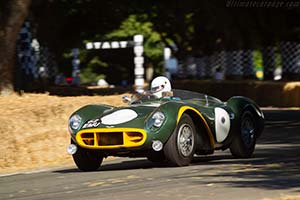
 For the 1954 season, the DB3S was further developed. The most significant development was a wind-tunnel developed, low-drag body for Le Mans. The prototype was also fitted with disc brakes at the front and a supercharger. In addition to the revisions to the DB3S, a V12-engined Lagonda sports racer was also developed. Perhaps all these separate developments spread the company resources thin but regardless, the 1954 season was a huge disappointment.