Page 1 of 2 Next >> With the demise of Group C at the end of 1993, the age of prototype racing seemed to be over. All eyes were now on the production based GT cars that the sport's governing body believed would attract more spectators200. Led by the Ferrari 333 SP, a new generation of racing cars evolved in the background. Quickly labelled 'Le Mans Prototypes' these were predominantly raced in North America and at Le Mans. This revival opened new doors for specialized manufacturers like Lola. In 1998 they launched their first sports car since 1992. In the following years the British company supplied chassis for privateer teams, until MG commissioned the construction of a brand new chassis for the LMP675 class. Known internally at Lola as the 'B01/60', the new sports racer was officially dubbed the MG EX257 and together with the EX258 rally car and EX259 touring car was part of an ambitious racing program of the recently reborn manufacturer.
The EX257 was the first Lola designed specifically for the LMP675 regulations, which compared to the bigger LMP900 class combined a lower weight with smaller engines. In theory the lower weight was enough to compromise for the smaller engine and both classes would be able to fight for on equal terms. Although it was a brand new design, Lola's engineers clearly carried over elements from their previous designs. However compared to its predecessors, the new car's lines were noticeably sharper. The most distinct aerodynamic features were the separate front fenders, which were reminiscent of the ill-fated Allard J2X-C. The Julian Sole penned carbon fibre panels covered a convential monocoque chassis, suspended by double wishbones all around. Power was provided by an MG badged version of AER's 2-litre Turbo engine. With restrictors fitted, it was good for around 500 bhp in 2001.
Two cars were completed in time for the official Le Mans test in May of 2001. It was for from a trouble free session for the brightly liveried machines. One car did not manage to complete a timed lap, while the other clocked the 25th fastest time. After qualifying a more promising 14th and 17th, the two cars were out with engine problems after less than 100 laps were completed. Much better prepared the MG Lolas were very impressive during qualifying for the 2002 Le Mans, setting the 6th and 12th time. The two cars were almost ten seconds ahead of the third fastest LMP675, which was a privately entered MG Lola. During the race, the fragility of the light and nimble Lola once again saw the race end prematurely. The LMP675 cars could indeed compete with the larger LMP900s on outright performance, but to keep the weight down to many compromises had to be made, which negatively affected reliability. At the end of the year MG announced their retirement and the cars were sold to privateer teams. Page 1 of 2 Next >>

 Ultimatecarpage.com
> Cars by brand
> Great Britain
> MG Lola
Ultimatecarpage.com
> Cars by brand
> Great Britain
> MG Lola
 Racing cars
> LMP
Racing cars
> LMP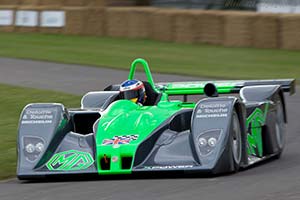
 With the demise of Group C at the end of 1993, the age of prototype racing seemed to be over. All eyes were now on the production based GT cars that the sport's governing body believed would attract more spectators200. Led by the Ferrari 333 SP, a new generation of racing cars evolved in the background. Quickly labelled 'Le Mans Prototypes' these were predominantly raced in North America and at Le Mans. This revival opened new doors for specialized manufacturers like Lola. In 1998 they launched their first sports car since 1992. In the following years the British company supplied chassis for privateer teams, until MG commissioned the construction of a brand new chassis for the LMP675 class. Known internally at Lola as the 'B01/60', the new sports racer was officially dubbed the MG EX257 and together with the EX258 rally car and EX259 touring car was part of an ambitious racing program of the recently reborn manufacturer.