Go to Ultimatecarpage.com

Car search: Quick Advanced 
  Ultimatecarpage.com  > Cars by brand  > United States  > Cunningham
C3 Continental Vignale Coupe
Cars statistics: 5054 cars, 430 makes, 39392 images; Events statistics: 215 reports, 41349 images; Forum statistics: 85,356 members, 41,968 topics; more...


  Cunningham C3 Continental Vignale Coupe
 

Cunningham C3 Continental Vignale Coupe Cunningham C3 Continental Vignale Coupe Cunningham C3 Continental Vignale Coupe Cunningham C3 Continental Vignale Coupe Cunningham C3 Continental Vignale Coupe Cunningham C3 Continental Vignale Coupe
Click here to save all images    Image credits: Wouter Melissen 

Model history:
Click here to download printer friendly version Very few privateers have been as successful in sportscar racing than Briggs Swift Cunnigham. Born as a rich banker's son in 1907, Cunningham got actively involved in motor racing rather late at the age of 41. He had previously backed others, but he did not drive himself until after his mother died, who very opposed to him racing. His first race was at Watkins Glen and the car was a Buick / Mercedes-Benz hybrid, known as the 'Bumerc', the construction of which Cunningham had backed in 1939. This race really spiked his interest in road racing, in which he actively participated for two decades.

More than anything, Cunnigham was interested in long distance racing and he set his sights on the most legendary of all, the 24 Hours of Le Mans. He did not just want to win the event, but he wanted to be the first to do so with an all-American team. After the Duesenbergs and Millers of the 1920s, very few American successes were scored in Europe. Prepared by Phil Walters and Frick and with the help of 1949 winner Luigi Chinetti, two Cadillacs were entered in the 1950 Le Mans race. One of these was fitted with a stock body, but the second was fitted with a custom built, which for obvious reasons was nick-named 'Le Monstre' by the French.

Although the cars were not on the pace, the 10th and 11th place finishes ensured that Cunningham's entries for the 1951 race would be accepted by the picky Automobile Club de l'Ouest (ACO), which organized the legendary race. To take on the strong competition Cunnigham bought Walters' and Frick's shop to form B.S. Cunningham Co, which was based out of West Palm Beach, Florida. Over the winter of 1950/51 a prototype racer was constructed, the C-1, powered by a Cadillac engine. Cunningham quickly abandoned the Cadillac engine, because of a complete lack of support from the company. He turned to Chrysler, who were willing to support the development and offer their HEMI engines at a 40% discount.

Dubbed the C-2R, the HEMI powered Cunningham was a sophisticated and well constructed affair. A simple, but effective steel tubular frame chassis formed the basis of the C-2. It was suspended at the front by unequal A-arms and at the rear by an exotic DeDion rear axle. The only gearbox available strong enough to cope with the Chrysler Firepower's enormous torque was a Cadillac three speed 'box. The package was clothed in a simple aluminium barchetta style body. Being very well built and very large, the Cunningham was rather overweight, which made the car very hard on the brakes. This was made even worse by the lack of engine braking by going down the gears compared to other cars fitted with four or five speed 'boxes.

Chrysler modified the Firepower engine to produce around 250 bhp, from the 180 bhp available in stock form. Despite the enormous weight of the car, the C-2Rs proved surprisingly competitive. Three cars were entered livered in white with two blue stripes, the first use of racing stripes ever. Two crashed out, but the third car held 2nd position when a bearing and valve failure threw it back considerably. It eventually finished in 18th position. Back in North America, Cunningham started to rack up victories with his racers. At the West Palm Beach factory work was started on a new racer for 1952 and a road car, of which the ACO required 25 to be produced to make Cunningham eligible to run as a separate manufacturer.

For 1952, the C-2R's biggest problems were tackled, which resulted in the smaller and much lighter C-4R. Technically the biggest change was the replacement of the heavy and complex DeDion axle by a simple live axle. Almost half a ton was shaved off the C-2R's weight. Performance was further increased thanks to the reworked Firepower engine, now pumping out over 300 bhp. In North America, the C-4R was virtually unbeatable, so Cunningham was quite confident that he could take on Europe's finest at Le Mans. Three cars were built entered, two with a barchetta body and one with a Kamm designed coupe body.

Again only one Cunningham managed to complete the 24 Hours in one piece. One of the barchettas and the coupe was forced to retire with engine problems. The remaining car, driven by Briggs Cunningham and William 'Bill' Spear, took top honours in their class and recorded a fourth place finish overall. In 1953 all three cars finished in the top ten, with the rebodied C-5R taking a 'best of the rest' spot in third behind the disc-brake D-Types. In 1954, Cunningham recorded another fourth place and secured a class victory for the third year running. This was the end of a very successful career for the V8 engined Cunnigham racers. Briggs Cunningham continued to race at Le Mans for many years with Jaguars, Chevrolets and Maseratis.

Briggs Cunningham's exceptional sportsmanship was not only displayed in cars, but also out on the sea, where he defended the United States' honours in the America's Cup. He won this prestigious sailing race in 1958 as the Captain of the 'Columbia'. As a manufacturer he was slightly handicapped by his ideal of building an all-American racer, which prevented him from using bits and pieces that would have made his cars even more successful. Especially his perseverance of using Firestone tires over the superior Dunlop rubber cost him dearly at Le Mans. Cunningham is a true pioneer who paved the way for people like Carroll Shelby and remains as one of the biggest names in motorsport.


Chassis: 5211
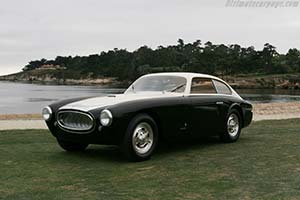
Chassis 5211 Featured is one of the road going C3s, which Cunningham required to construct to qualify as a car manufacturer. Technically the road cars were very similar to the racing cars. Upon completion the rolling chassis was shipped to Italy for Vignale to body. The C3 was very expensive for an American car, and as soon as the mandatory 25 cars were constructed, production ceased. Pictured is s/n 5211, which is seen here at the 2004 European Concours d'Elegance.

Article by Wouter Melissen, last updated on July 25, 2005

Add your comments on the Cunningham C3 Continental Vignale Coupe

 Chassis 5210?  
henk4
03-08-2009
Hi Jack,
In 2007 a C3 (Chassis 5210) in the Silver/Blue colour as you describe was shown at the Pebble Beach Concours d'Elegance, owned by the Frost family from Duluth, Georgia, perhaps it might be worth while finding out if this is the car you are looking for. The car was also shown at the Quail Lodge in August 2006.
 Cunningham Registry  
jackcasa
02-26-2009
In the early '50s a doctor friend of my dad's had two (2) Cunningham cars, a C2 that had run at LeMans, and a C3 Vignale coupe. I had privledge of driving both of these very special cars, me at the tender age of sixteen (16)! The C2 had been repainted silver while the C3 was, as I recall - it has been 56 years - silver over dark blue.
Is there a Cunningham cars registry? If so, I would be extremely interested in obtaining contact information.
     

General specifications
Country of origin United States
Chassis number 5211
Numbers built 27
Produced from 1951 - 1954
Body design Vignale

Past Sales

Engine
Configuration Chrysler FirePower 90º V8
Location Front, longitudinally mounted
Displacement 5.424 liter / 331 cu in
Bore / Stroke 96.8 mm (3.8 in) / 92.1 mm (3.6 in)
Valvetrain 2 valves / cylinder, OHV
Fuel feed 4 Zenith Carburettors
Aspiration Naturally Aspirated
Power 235 bhp / 175 KW @ 4400 rpm
Torque 407 Nm / 300 ft lbs @ 4000 rpm
BHP/Liter 43 bhp / liter

Drivetrain
Chassis aluminium body on steel tubular chassis
Front suspension unequal length A-arms, coil springs, telescopic shock absorbers
Rear suspension live axle, parallel trailing arms, coil springs, telescopic shock absorbers
Steering worm and roller
Brakes drums, all-round
Gearbox 4 speed Automatic
Drive Rear wheel drive

Dimensions
Weight 1588 kilo / 3500.9 lbs

Performance figures
Power to weight 0.15 bhp / kg
Top Speed 210 km/h (130 mph)
0-60 mph 10.0 s

Resources
Related articles
Useful links