Page 1 of 2 Next >> Even though Porsche was dominating GT racing in the second half of the 1970s with the 935, the Kremer brothers believed that they could improve the factory built racing cars. Manfred and Erwin Kremer ran a Porsche dealership and in their spare time Erwin successfully raced Porsches prepared by Manfred. From 1977 Manfred stepped up and started to extensively modify the racing cars. In 1978 the Kremer built 935 K2 formed a worthy adversary for the regular 935s, scoring several victories. Another winter of development turned Kremer's 935 into a world class racing car.
Manfred Kremer's main focus was on shedding weight. That was one of the main reasons to replace the factory fitted air-to-water intercooler with an air-to-air intercooler. This also eliminated the risk of leaks in the cooling system. The three litre flat six engine was carried over from the factory built 935s, although in later years a slightly larger 3.2 litre engine was also offered. Depending on the boost level the twin-Turbocharged engine was good for anywhere between 740 bhp and 800 bhp. Power was transferred to the rear wheels through a four speed manual gearbox.
Other improvements included the relocation of the oil cooler and the fuel tank. For ease of maintenance and to enable quick repairs the mounting system of the engine was extensively revised. The shape of the body was also slightly revised adopting the shape of the Porsche Works cars and also the lessons learned in the previous two seasons. Most panels were replaced by high tech composite examples, which alone already sliced 30 kg off the weight. Kremer told legendary journalist Paul Frere that the car incorporated over 100 changes, which made it around 1% more efficient. It does not sound like much, but over a race distance can really make a difference.
Dubbed the Porsche 935 K3, the new racing car was ready in time for the 1979 Zolder round of the German Sportscar Championship. The young and very talented Klaus Ludwig drove the car to a convincing debut victory, beating a colourful field packed with Porsche built 935s. He continued his good form throughout the season, winning a staggering 11 races out of a possible 12. At the Nürburgring he set a lap time of 7.33, which was fast enough to qualify for the last F1 race held on the Nordschleiffe. Ludwig also headlined the Kremer Le Mans effort and piloted the K3 to its biggest victory together with brothers Don and Bill Whittingdon. It was the first Le Mans win for a real production car based machine since the War, a feat repeated only once more by the McLaren F1 in 1995. Page 1 of 2 Next >>

 Ultimatecarpage.com
> Cars by brand
> Germany
> Porsche
Ultimatecarpage.com
> Cars by brand
> Germany
> Porsche
 Racing cars
> GT Cars
Racing cars
> GT Cars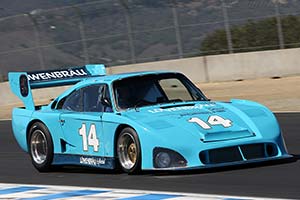
 Even though Porsche was dominating GT racing in the second half of the 1970s with the 935, the Kremer brothers believed that they could improve the factory built racing cars. Manfred and Erwin Kremer ran a Porsche dealership and in their spare time Erwin successfully raced Porsches prepared by Manfred. From 1977 Manfred stepped up and started to extensively modify the racing cars. In 1978 the Kremer built 935 K2 formed a worthy adversary for the regular 935s, scoring several victories. Another winter of development turned Kremer's 935 into a world class racing car.