Page 1 of 1 A last minute but fundamental regulation change left many Grand Prix teams scrambling ahead of the 1983 season. Ligier even more so as the French team had also lost its supply of Matra V12 engines. The rule changes were intended to eliminate ground-effect aerodynamics by banning skirts and mandating a flat bottom between the two axles lines. To save costs, Ligier had intended to field an evolution of the existing JS19 in 1983 but were now faced with additional mechanical and aerodynamic challenges.
The original plan was still carried out as the first new-for-1983 JS21s were built using the three existing JS19 chassis. With the engine a fully stressed member of the chassis, the monocoque chassis did require revised mounting points to allow for a switch back to Cosworth DFV power. Although it is the most successful Formula 1 engine ever, the DFV was really showing its age by 1983 and was surpassed by the turbo engines used by most other teams. It was mated to a five-speed Hewland gearbox.
With ground-effect banned, there no longer was a need for full length side-pods and Ligier designers Michel Beaujon and Claude Galopin did away with the altogether. The radiators were moved back and mounted just ahead of the rear suspension. The idea was to move as much weight as possible over the rear axle to improve traction. The loss of downforce as a result of the new regulations was compensated for by sizeable front and rear wings. A Citroën-derived hydropneumatic suspension system was also fitted.
Signed to drive the JS21 were Jean-Pierre Jarier and Brazilian Raul Boesel, who had brought with him some lucrative sponsorship deals. The team had clearly been faced with too many changes and both drivers struggled with the JS21. It lacked outright pace and the novel suspension system only worked properly on slower circuits. Reliability was also an issue and for the first time in Ligier's history not a single point was scored.
It was an interim year for the team as for 1984 a brand-new carbon-fibre monocoque car was readied to be powered by a Renault-supplied twin-turbo V6. Ligier built four JS21s, recycling all three JS19s and building one brand-new chassis. The first JS21 was used for testing only. Page 1 of 1

 Ultimatecarpage.com
> Cars by brand
> France
> Ligier
Ultimatecarpage.com
> Cars by brand
> France
> Ligier
 Racing cars
> Formula 1
Racing cars
> Formula 1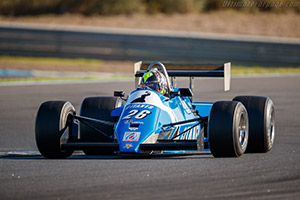
 A last minute but fundamental regulation change left many Grand Prix teams scrambling ahead of the 1983 season. Ligier even more so as the French team had also lost its supply of Matra V12 engines. The rule changes were intended to eliminate ground-effect aerodynamics by banning skirts and mandating a flat bottom between the two axles lines. To save costs, Ligier had intended to field an evolution of the existing JS19 in 1983 but were now faced with additional mechanical and aerodynamic challenges.