
 Ultimatecarpage.com
> Cars by brand
> Italy
> ATS
Ultimatecarpage.com
> Cars by brand
> Italy
> ATS
 2500 GT 2500 GT
|
| ATS 2500 GT |
| Article | Image gallery (14) | 2003 | Specifications | User Comments (3) |
|
|
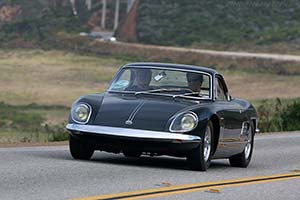
Page 1 of 1  Few could have imagined the impact the fall-out between Enzo Ferrari and several of his key engineers late in 1961 had for the Italian automotive industry. Before they formed Autodelta, designed the Lamborghini V12 engine or started manufacturing complete cars to name just a few of Carlo Chiti and Giotto Bizzarrini's achievements, the Ferrari 'defectors' worked together on a sportscar and Formula 1 racer that would directly challenge their former employer. Shortly after leaving Ferrari, the talented engineers formed Automobili Turismo e Sport (ATS) with backing from three rich Italian industrialists including Count Volpi. Few could have imagined the impact the fall-out between Enzo Ferrari and several of his key engineers late in 1961 had for the Italian automotive industry. Before they formed Autodelta, designed the Lamborghini V12 engine or started manufacturing complete cars to name just a few of Carlo Chiti and Giotto Bizzarrini's achievements, the Ferrari 'defectors' worked together on a sportscar and Formula 1 racer that would directly challenge their former employer. Shortly after leaving Ferrari, the talented engineers formed Automobili Turismo e Sport (ATS) with backing from three rich Italian industrialists including Count Volpi.To cut costs and development, it was decided that both the sportscar and the F1 racer would be powered by a similar engine. Just what kind of engine caused the first and possibly fatal get together between Chiti and Bizzarrini. The former was determined to use a V8, while the latter felt his ideas for a V12 were all but ignored. Eventually Bizzarrini decided to leave the company and took with him the vital backing of Count Volpi. Bizzarrini later sold his V12 design to Lamborghini, so it did not go to waste. Undeterred, Chiti continued with his work and developed 1.5 litre (F1) and 2.5 litre (road car) versions of the eight cylinder engine. The compact eight cylinder engine was constructed completely from lightweight aluminium-alloys. The advanced design featured twin overhead camshafts and two valves per cylinder. Originally the V8 came equipped with four Weber Carburetors, but later a Lucas fuel-injection system was added as an option. Despite its modest displacement of 2467cc, the engine was good for 220 bhp. For the lightweight 'Superleggera' model a 250 bhp version of the engine was also developed. The high revving V8 was mated to a five speed gearbox, originally made by Colotti to Chiti's own design. Later cars were equipped with a slightly more civilized ZF five-speed gearbox. The drivetrain was mounted mid-ships in a spaceframe constructed from another light alloy. Suspension was independent by double wishbones, all-round. Stopping power was provided by Dunlop disc brakes with the rear ones mounted inboard next to the final drive unit. Chiti commissioned former Bertone designer Franco Scaglione to pen a low and sleek two-seater body. As quite often with Scaglione's designs, the result was breathtakingly beautiful. The fine lines were turned into metal (steel for the base model and aluminium for the 'supperleggera') by Turinese coachbuilder Sefarino Allemano. It took all involved little over a year to complete the first ATS 2500 GT, which made its debut at the 1963 Geneva Motor Show. One of the first mid-engined production cars and most certainly the first Italian car of this type, the elegant coupe was one of the true stars of the show. While the 2500 GT toured the show circuit in search for customers, the company raced the 1.5 litre Formula 1 car with 1961 World Champion Phil Hill as primary driver. This greatly drained the company's resources and the future looked very dim at the end of the year that had started off so well. For 1964 the Formula 1 program was axed and instead Chiti focused on the competition oriented 2500 GTS (for Superleggera). Fitted with an aluminium body and the 250 bhp version of the V8, two were entered in the Targa Florio. Both retired with ignition problems. It was the final appearance of an ATS in any form and after at least eight (some suggest as much as nineteen) examples were produced the Bologna based factory shut down. Chiti set up Autodelta, which would grow out to become Alfa Romeo's racing department. Many of the 2500 GT's design elements later found their way in the Alfa Romeo Tipo 33 racers and the Scaglione designed 'Stradale' road car. With few cars built and even fewer survivors, an ATS 2500 GT is a very rare sight these days. A great shame as the mid-engined two-seater was well ahead of its day and remains as one of the finest supercars built in an era that is hardly short on superb motors. Of the eight cars originally built of which five are known to have survived. Page 1 of 1 |
| Article | Image gallery (14) | 2003 | Specifications | User Comments (3) |
| All Cars - Contact us - Privacy Statement - Top | © 1998 - 2026 Ultimatecarpage.com |