Page 1 of 1 Jaguar's flagship model has entered its seventh incarnation, 34 years after its initial launch in 1968. The seventh XJ is longer, wider and taller than the car it replaces. However, the extensive use of aluminium both for the chassis and suspension also made it lighter and 60% stiffer than its predecessor. aluminium has been used by Jaguar for weight saving purposes before, most notably in the Lightweight racing versions of the Jaguar E-Type.
To ensure a perfect ride quality even on the poorest of roads Jaguar have chosen for self-leveling air-suspension. The air system also ensures ride height remains constant regardless of load conditions - an important factor because in the lightweight XJ, vehicle occupants represent a relatively higher proportion of gross vehicle weight.
Four engines are available, including an all new 3.5 litre V8 engine and a V6 engine again for the first time since 1997. Top of the line engine is the 4.2 AJ V8 engine already seen in the latest S-Type and XK series. It is available in normally aspirated and supercharged form for the top of the line XJR. All engines are mated to a six-speed ZF automatic gearbox. Page 1 of 1

 Ultimatecarpage.com
> Cars by brand
> Great Britain
> Jaguar
Ultimatecarpage.com
> Cars by brand
> Great Britain
> Jaguar
 XJR
XJR
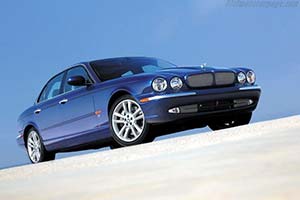
 Jaguar's flagship model has entered its seventh incarnation, 34 years after its initial launch in 1968. The seventh XJ is longer, wider and taller than the car it replaces. However, the extensive use of aluminium both for the chassis and suspension also made it lighter and 60% stiffer than its predecessor. aluminium has been used by Jaguar for weight saving purposes before, most notably in the Lightweight racing versions of the Jaguar E-Type.