<< Prev Page 2 of 2 The D50's unique configuration made it a completely different car to drive than for example the Maserati 250F, which was born to slide. With a superior amount of grip, the Lancia did not slide at all and if it did, there usually was no preventing a spin. Ascari started 1955 off on a high with two victories in two pre-season Italian races. At the Monaco Grand Prix, he was about to take the lead when he crashed out and plunged into the harbor. Unfortunately this remains the D50's main claim to fame. Ascari survived, but died a few weeks later testing a Ferrari sports car.
Without a lead driver, Lancia's future all of a sudden looked grim and despite the car's obvious potential, the Formula 1 project was sold off to Ferrari. Motor racing had brought Lancia successes, but also moved the company on the verge of bankruptcy. Fortunately, Fiat stepped up and purchased the assets. In the year's to come Lancia would grow out to be one of the most successful names in rallying, but it would never return to Formula 1. In very slightly modified form the 'Ferrari' D50 took the 1956 World Championship, in the hands of Juan Manuel Fangio.
When the racing program was abandoned many of the remaining spares were destroyed and only two of the six cars originally built have survived. Both cars are located in Italian museums and in the past fifty years have only very rarely been seen out on a track. Remarkably a number of engines and transaxles did survive and in recent years have been used to construct at least seven replicas. The builders were given full access to the original cars, which helped them to build the replicas to a stunning original level. Today they enthusiasts can once again enjoy the rumble of Jano's superb V8 engine. << Prev Page 2 of 2

 Ultimatecarpage.com
> Cars by brand
> Italy
> Lancia
Ultimatecarpage.com
> Cars by brand
> Italy
> Lancia
 Racing cars
> Formula 1
Racing cars
> Formula 1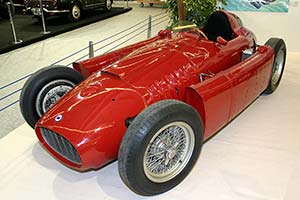
 The D50's unique configuration made it a completely different car to drive than for example the Maserati 250F, which was born to slide. With a superior amount of grip, the Lancia did not slide at all and if it did, there usually was no preventing a spin. Ascari started 1955 off on a high with two victories in two pre-season Italian races. At the Monaco Grand Prix, he was about to take the lead when he crashed out and plunged into the harbor. Unfortunately this remains the D50's main claim to fame. Ascari survived, but died a few weeks later testing a Ferrari sports car.