<< Prev Page 2 of 2 Team Penske retained both their drivers, which meant the PC26 would be piloted by Al Unser Jr. and Paul Tracy. In 1994 this talented pairing had finished first and third in the CART Championship and Unser also won the coveted Indy 500, driving the Penske Mercedes. The partnership with Carl Hogan had come to an end after just one season, so there would be no third PC26 on the grid entered under the Penske-Hogan banner. The first chassis was completed late in 1996 and flown to the United States for early testing. When the season got under way, the two drivers had already racked up 2500 miles.
The hard work over the winter immediately yielded results as Paul Tracy finished second at the season opening race at Homestead (Miami). The Canadian went one better at Nazareth in Pennsylvania; Penske's home race, ending a 20 race drought for Penske. He added two more wins to his tally in the following races at Rio de Janeiro and in St. Louis. After his hat-trick of wins, Tracy was a genuine title contender. It was not to be as he struggled to reach the finish in the subsequent rounds. He eventually ended the championship in fifth. His team-mate suffered from bad luck throughout the year and finished 13th.
After the three victories early in the season, the Penske/Mercedes/Goodyear combination struggled once again. It would turn out that the St. Louis victory, Penske's 99th, was its last as a manufacturer. Team Penske continued with their own cars for two more seasons until they finally switched to a Honda engined Reynard in 2000. Gil de Ferran finally scored Penske's 100th win at Nazareth that season. With just three wins, the PC26 was far from the most successful Penske. It does earn a spot in history as the last victorious Penske car, ending a tradition that started in 1976 when John Watson drove a Penske to victory in the Austrian Grand Prix. << Prev Page 2 of 2

 Ultimatecarpage.com
> Cars by brand
> United States
> Penske
Ultimatecarpage.com
> Cars by brand
> United States
> Penske
 Racing cars
> Indy
Racing cars
> Indy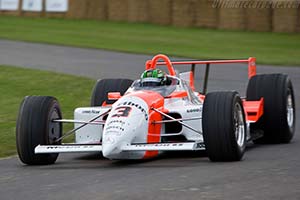
 Team Penske retained both their drivers, which meant the PC26 would be piloted by Al Unser Jr. and Paul Tracy. In 1994 this talented pairing had finished first and third in the CART Championship and Unser also won the coveted Indy 500, driving the Penske Mercedes. The partnership with Carl Hogan had come to an end after just one season, so there would be no third PC26 on the grid entered under the Penske-Hogan banner. The first chassis was completed late in 1996 and flown to the United States for early testing. When the season got under way, the two drivers had already racked up 2500 miles.