<< Prev Page 3 of 3 Owing to the troubles in testing, only a single 'Moby Dick' was fielded in the 24 Hours of Le Mans. It immediately showed its potential by flying along the Mulsanne Straight at a startling 365 km/h. Surrounded by purpose-built prototype racers, the 'production' 935/78 set the second fastest time in qualifying. During the race Rolf Stommelen and Manfred Schurti were once more confronted with teething engine problems. It suffered from a misfire for most of the race and with a third to go an oil-leak was discovered. The two Germans nursed the car home in eighth. After the race, it was found to be a minor problem that would most likely not have caused any problems. After Le Mans, 'Moby Dick' was fielded only twice more, retiring from the lead on both occasions.
At the end of the year, Porsche announced its withdrawal from racing, effectively ending the 935/78's racing career. It is believed that Porsche built one complete car and a spare chassis intended for use in 1979. The completed car has taken pride of place in the Porsche factory museum while the spare was eventually sold and only recently built into a complete car. In 1981 Reinhold Joest used Porsche drawings to build his own 'Moby Dick' but he did not have the benefit of the sophisticated engine. By then many others had followed Porsche's example and two Joest cars could do no better than several second place finishes in the IMSA series. Ironically one of them was involved in a fatal accident that took the life of one of 'Moby Dick's' original drivers, Rolf Stommelen.
Despite the debut victory, Norbert Singer's brilliant machine in the end proved to be flawed. The program was nevertheless far from a complete loss for Porsche as the four-valve engine would go on score outright wins in all major sports car races in the back of the 936, 956 and 962 prototypes. The 935/78 remains as one of the most extreme production based racing cars built and eventually found a successor in the 911 based GT1 cars built late in the 1990s. << Prev Page 3 of 3

 Ultimatecarpage.com
> Cars by brand
> Germany
> Porsche
Ultimatecarpage.com
> Cars by brand
> Germany
> Porsche
 Racing cars
> GT Cars
Racing cars
> GT Cars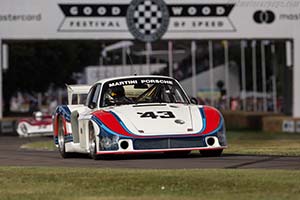
 Owing to the troubles in testing, only a single 'Moby Dick' was fielded in the 24 Hours of Le Mans. It immediately showed its potential by flying along the Mulsanne Straight at a startling 365 km/h. Surrounded by purpose-built prototype racers, the 'production' 935/78 set the second fastest time in qualifying. During the race Rolf Stommelen and Manfred Schurti were once more confronted with teething engine problems. It suffered from a misfire for most of the race and with a third to go an oil-leak was discovered. The two Germans nursed the car home in eighth. After the race, it was found to be a minor problem that would most likely not have caused any problems. After Le Mans, 'Moby Dick' was fielded only twice more, retiring from the lead on both occasions.