<< Prev Page 2 of 3 Next >> The RC F marks a world-first for a front engine/rear-wheel drive car with its use of a Torque Vectoring Differential. Designed to raise driving enjoyment by increasing traction and control, the system has three operating modes:
Standard, for a balance of agile performance and high-speed stability
Slalom, for an emphasis on nimble response to steering inputs
Track, for consistent, stable cornering in circuit driving, with optimum driver control. The RC F also has a recalibrated Vehicle Dynamics Integrated Management system with an additional vertical G-force sensor to secure even greater vehicle stability
The foundation of the new RC F's outstanding mechanical grip is its highly rigid body, featuring large cross-section rocker panels and front lower brace. Lexus has deployed numerous specialist manufacturing techniques to further enhance rigidity, including the use of body adhesives, laser-screw welding and multi-spot welding. A wider tyre and wheel assembly help to raise grip performance.
Independent, coil-sprung suspension is used front and rear, incorporating monotube gas dampers and ball-jointed anti-roll bars. The car's unsprung weight has been kept down by using 19-inch forged aluminium alloy wheels, which minimise wheel assembly mass while at the same time improving rigidity.
As in the Lexus LFA supercar, the RC F is fitted with an active rear wing, Incorporated in the bootlid, this provides additional downforce at speeds above 50mph. The rear wings is a highlight of the RC F's comprehensive aerodynamic grip and stability package, which also includes tuning of the flat underbody, race-bred air management ducts behind the front bumpers and wings, and strategic placement of aero stabilising fins. << Prev Page 2 of 3 Next >>

 Ultimatecarpage.com
> Cars by brand
> Japan
> Lexus
Ultimatecarpage.com
> Cars by brand
> Japan
> Lexus
 RC F
RC F
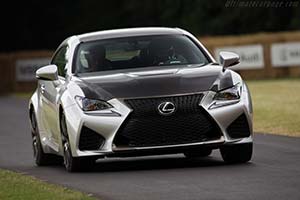
 The RC F marks a world-first for a front engine/rear-wheel drive car with its use of a Torque Vectoring Differential. Designed to raise driving enjoyment by increasing traction and control, the system has three operating modes: