<< Prev Page 2 of 2 Regulation changes at the start of the 1968 season, which saw the displacement for purpose built prototype racers reduced to just three-litre opened the door to outright victories for Porsche. Not surprisingly, a new three-litre engine was developed but it would not quite be ready for the start of the season. Its pending arrival was reflected by the revisions made to the new-for-1967 907 chassis. These featured a slightly larger engine bay and the oil cooler was relocated to the tip of the nose, so a larger one could be fitted if needed. An experimental chassis was constructed using aluminium tubes, which would become the standard for future Porsche sports cars.
For the season opening Daytona 24 Hours, Porsche fielded four new 907Ls. These were powered by the latest version of the Type 771 flat eight, which was now deemed strong enough to last 24 hours. The air-cooled engine displaced just under 2.2 litre and was officially rated at a very impressive 270 bhp. Among the changes to the bodywork was the addition of a longer roof, which filled some of the space previously used by the canopy style wrap-around windshield. This helped reduce weight, as less glass was needed but also improved the 907's visual appeal. Both using the same nose, the 1968-specification 907 could be fitted with a long or short tail.
At Daytona, the long tail 907L was used, which proved exceptionally quick on the banking and altogether more stable than it had been a year early. Sadly, the car that had grabbed the early lead crashed out during the night but the other three would go on to finish an impressive first, second and third, securing Porsche's first ever outright win in a 24-hour race. In short tail, 907K, form, the 2.2 litre engined Porsche would also go on to win the Sebring 12 Hours and Targa Florio before it was superseded by the three-litre 908. The cars would go on to complete the season as back-ups to the 908 before being sold to privateers.
Raced by the factory team for little of a season, the Porsche 907 is not as well known today as its immediate predecessors and successors. It nevertheless should receive much more credit as the it helped Porsche make the final step to success in the 24-hour races, which would be followed up with at least 16 outright wins at Le Mans. Today, the 907 is a rare sight, partly because only a handful were built and also because a genuine Type 771 engine is very hard to come by. << Prev Page 2 of 2

 Ultimatecarpage.com
> Cars by brand
> Germany
> Porsche
Ultimatecarpage.com
> Cars by brand
> Germany
> Porsche
 Racing cars
> Other Sportscars
Racing cars
> Other Sportscars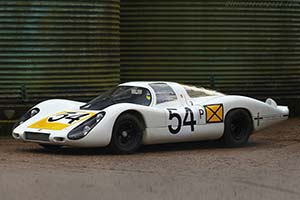
 Regulation changes at the start of the 1968 season, which saw the displacement for purpose built prototype racers reduced to just three-litre opened the door to outright victories for Porsche. Not surprisingly, a new three-litre engine was developed but it would not quite be ready for the start of the season. Its pending arrival was reflected by the revisions made to the new-for-1967 907 chassis. These featured a slightly larger engine bay and the oil cooler was relocated to the tip of the nose, so a larger one could be fitted if needed. An experimental chassis was constructed using aluminium tubes, which would become the standard for future Porsche sports cars.