<< Prev Page 2 of 2 Dubbed the Intrepid RM-1, a pair of the new GTP racers was constructed by the newly established Pratt & Miller outfit early in 1991. Riley's focus on the ground-effect aerodynamics had paid off as the car produced close to 4,000 kg of downforce and it was capable of cornering forces of up to 3.5 G. Entered for Wayne Taylor, the first example impressed on its early March debut debut at West Palm Beach. The South African qualified sixth and finished the race in second. Taylor subsequently qualified on pole in Miami but failed to finish due to a half-shaft failure. In May, the second car was ready and entrusted to Tommy Kendall.
During the subsequent outings Taylor and Kendall impressed particularly during qualifying. After a string of strong finishes, Taylor scored the first IMSA GTP victory for the Intrepid at New Orleans after starting seventh. At Watkins Glen, the unprecedented downforce levels caused a suspension failure, which sent Kendall's Intrepid into the wall at very high speed. He was lucky to walk away but it meant the team was down to one car for the remainder of the season. Taylor continued to impress in qualifying but no more victories were scored.
Ahead of the 1992 season, two additional cars were built; one for Tommy Kendall, while the other car along with the surviving 1991 Intrepid were sold to Tom Milner Racing. In a quest to secure more support, the cars were renamed Chevrolet GTP but it was to no avail. During the season, the cars lost competitiveness. Among the problems were the mandatory switch to steel brakes from the carbon-composite discs previously used and the lack of top speed due to the considerable drag created by the high downforce levels. Podium finishes early in the 1992 season were the rare highlights of that year.
The cars were raced into the 1993 season but with little success. Despite its potential and the unprecedented levels of downforce generated by the Intrepid, ultimately only one victory was scored. The project's legacy is altogether more impressive as Bob and his son Bill Riley would go on to use a derivative of the design to create the highly successful Riley & Scott prototype races, while the Pratt & Miller partnership continues to this day, most famously running the Chevrolet Corvette works program. << Prev Page 2 of 2

 Ultimatecarpage.com
> Cars by brand
> United States
> Intrepid
Ultimatecarpage.com
> Cars by brand
> United States
> Intrepid
 Racing cars
> Group C / IMSA GTP
Racing cars
> Group C / IMSA GTP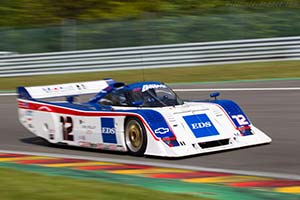
 Dubbed the Intrepid RM-1, a pair of the new GTP racers was constructed by the newly established Pratt & Miller outfit early in 1991. Riley's focus on the ground-effect aerodynamics had paid off as the car produced close to 4,000 kg of downforce and it was capable of cornering forces of up to 3.5 G. Entered for Wayne Taylor, the first example impressed on its early March debut debut at West Palm Beach. The South African qualified sixth and finished the race in second. Taylor subsequently qualified on pole in Miami but failed to finish due to a half-shaft failure. In May, the second car was ready and entrusted to Tommy Kendall.