<< Prev Page 2 of 2 Now classified as a Group C car, the Ford C100 faced strong competition from works Porsche and Lancia efforts. The four cars were entered in the DRM series with Zakspeed and the World Championship with the factory team. Winkelhock and Ludwig qualified on pole for the Nürburgring 1000km only to retire from the race with differential issues. At Le Mans, one car would briefly lead the race but reliability issues thwarted the effort once more. There was another pole at Brands Hatch but again there was no luck for the C100s in the race.
Tony Southgate had been hired to help Thompson improve the cars further for 1982. Keith Duckworth at Cosworth also had a turbocharged version of the V8 engine under development. At least one C100 was updated to this Mk3 specification although this was still fitted with the naturally aspirated DFL engine. Sadly, it was run only once in testing at Paul Ricard before Ford decided to pull the plug on the effort. One of the main reasons was that there was no clear indication when the new Cosworth engine would be ready to run.
For the 1983 season, two of the existing cars were handed to Zakspeed, who continued to race them for several more seasons with considerable success. During this period, they were constantly updated and eventually also powered by the German team's own four-cylinder turbo engine. Klaus Niedzwiedz was most successful in the renamed Zakspeed C1/8, winning several DRM races and also the 1984 Interserie Championship. The C100 also reappeared in an altogether different guise, forming the basis for the second Ford Transit Supervan.
Although showing great pace, the Ford C100 ultimately did not deliver for the 'Blue Oval' on the international level. Abandoned after less than two seasons of racing, it does continue to hold the distinction of being the last Ford to vie for overall victory in the 24 Hours of Le Mans. << Prev Page 2 of 2

 Ultimatecarpage.com
> Cars by brand
> Great Britain
> Ford
Ultimatecarpage.com
> Cars by brand
> Great Britain
> Ford
 Racing cars
> Group C / IMSA GTP
Racing cars
> Group C / IMSA GTP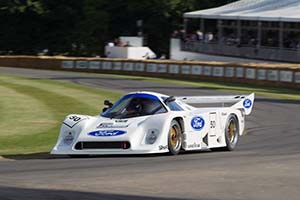
 Now classified as a Group C car, the Ford C100 faced strong competition from works Porsche and Lancia efforts. The four cars were entered in the DRM series with Zakspeed and the World Championship with the factory team. Winkelhock and Ludwig qualified on pole for the Nürburgring 1000km only to retire from the race with differential issues. At Le Mans, one car would briefly lead the race but reliability issues thwarted the effort once more. There was another pole at Brands Hatch but again there was no luck for the C100s in the race.