
 Ultimatecarpage.com
> Cars by brand
> Italy
> Ferrari
Ultimatecarpage.com
> Cars by brand
> Italy
> Ferrari
 F80 F80
|
| Ferrari F80 |
| Article | Image gallery (27) | Specifications |
|
|
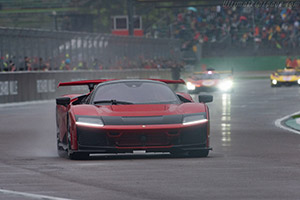
<< Prev Page 3 of 3  The tub and other elements of the chassis of the F80 were developed using a multi-material approach, where the best suited material for the task is used for each individual zone. The cell and roof are made of carbon fibre and other composites, while the front and rear subframes are made of aluminium and are fastened to the tub with titanium screws. At the rear there is an additional aluminium subframe, fastened to the main rear subframe with screws, for carrying the battery. The tub and other elements of the chassis of the F80 were developed using a multi-material approach, where the best suited material for the task is used for each individual zone. The cell and roof are made of carbon fibre and other composites, while the front and rear subframes are made of aluminium and are fastened to the tub with titanium screws. At the rear there is an additional aluminium subframe, fastened to the main rear subframe with screws, for carrying the battery.The subframes are made up of closed-end extrusions connected to each other by cast elements. The tub features hollow sills in carbon fibre serving as the main load-bearing elements. The roof is made of carbon fibre, fabricated and then cured in a single session in the autoclave. Both areas use dual tubular bladders, an innovative production method derived from Formula 1. The tub and roof both use internal carbon-fibre and Rohacell/Nomex sandwich panels as load-bearing structures. As on the LaFerrari, the sills act as side impact absorbers. The asymmetric layout of the cabin allowed each side of the tub to be optimised separately: the driver side has an adjustable seat, with a generous range of positions ensuring driving comfort and safety in the event of a side-on impact. This necessitated a larger number of structural panels in the floor and longer impact absorbers on the driver side than the passenger side, where a fixed seat is used to save weight while still ensuring uncompromised safety for both occupants. The front aluminium impact-absorbing longerons also contribute to heat management, as their hollow interiors are used as cooling air ducts for the brake system. Ferrari co-developed a new casting solution that has reduced the minimum wall thickness limit previously applicable for these castings (2.0 mm) by 23%. Together, these solutions have brought a weight saving of 5% while increasing torsional and beam stiffness by 50% with respect to the LaFerrari. NVH has also been significantly improved to offer the most comfortable driving experience possible. The bodyshell of the F80 is completely new and is fabricated from pre-preg carbon fibre and cured in the autoclave using technology derived from Formula 1 and other motorsports. The front bonnet features an S-Duct consisting of a fixed element connecting the two front wings. Butterfly doors are used, as on the LaFerrari, with a dual axis of rotation hinge mechanism allowing them to open vertically to an angle of almost 90°. The substructure of the doors, a structural element also tasked with absorbing dynamic loads in the event of lateral impact, is constructed from special high-performance carbon fibre. The rear engine cover, which echoes the styling cues of the door from the side view, includes six slots venting hot air from the V6 engine and a grille which also vents air. The F80 is the product of a creative design study that has led the team of the Ferrari Styling Centre headed by Flavio Manzoni to make a radical change in the visual language of the marque, forging a link between the past and future of Ferrari design. With the intent of assimilating a host of different elements of the design language and DNA of the brand, this study first turned its attention to the aesthetics of the marque’s F1 racing cars to identify the direction for creating a car with a modern and innovative visual identity that can accommodate a driver and a passenger despite offering the uncompromised experience of a single-seater. With this logic as the foundation, the design of the F80 was then developed with technological input, lending the car its boldly high-tech character. The ambitious performance goals necessitated a holistic approach to the project; as a result, the formal design project for the F80 progressed from start to definitive completion with the Styling Centre working in constant synergy with the engineering, aerodynamics and ergonomics departments. From the very first sketches and the more abstract initial studies in form, the project evolved in a process of natural convergence to strike a perfect balance between form and volume that visually expresses the uncompromised performance of the car to perfection. The F80 has a strongly futuristic visual impact with unmistakeable references to aerospace. The architecture is defined by a dihedral cross section with its two bottom corners firmly planted on the wheels. From the side view, the rear section has a sculpted flow that emphasises the muscularity of the entire rear wing. The front section of the car is defined by more architectural elements: the wheelarch ends with a vertical panel that stands proud of the door paying homage to the visual language of the F40. Rising out from the volumes of the lower body is the cabin, a floating bubble structure of unexpected volumes, and the product of an exacting study in architecture and proportion. A whole 50 mm lower than greenhouse of the LaFerrari, the cab has a significant effect on the perception of volume, broadening the shoulders of the car to give the cockpit an even more compact look. As on all latest-generation Ferraris, the contrast between the upper zone in bodywork colour and the lower zone in clear-coat finished carbon fibre accentuates the design of the car, revealing more of its technical side with each new glance. The designers wanted to avoid an anthropomorphic effect at the front of the F80; the headlamps are concealed in a visor element, a black screen serving both aerodynamic and lighting functions that gives the F80 a particularly original appearance. The short-tail rear of the car has two different configurations during use: with the mobile wing stowed or deployed. The tail lights are set into a two-layer structure consisting of the tail fascia and the spoiler, creating a sandwich effect that gives the rear an extremely sporty character in both configurations. With the rear spoiler raised, the car expresses even more power and dynamism as the difference in visual balance between the two configurations reveals the other side of its character. The functional needs of the car have been resolved visually in the design to create the perfect dialogue between performance and form. Some of these functional features play a very strong role in defining the visual character: the NACA duct channelling air towards the engine intake and lateral radiators, for example, is as iconic as it is functional, and constitutes one of the most original styling cues of the flank. Another functional but highly symbolic element is the louvred engine compartment spine, where six slots, one for each cylinder of the internal combustion engine, create an unexpected relationship between the geometric lines and sculptural surfaces of the car. The compact proportions of the cabin were made possible by opting for a cockpit inspired by a single-seat racer, creating a visual perception akin to an enclosed Formula 1 car. A lengthy process involving designers, engineers, ergonomics specialists and Colour & Trim experts culminated in an original new solution that sets the driver unequivocally as the protagonist in the cabin and transforms the car into a “1+”. The decidedly enveloping cockpit is centred entirely around the driver, with its forms converging towards the controls and instrument panel. The control panel is also oriented ergonomically towards the driver, creating a sort of cocoon effect around them. While ergonomically complete and comfortable, the passenger seat is so well integrated into the trim of the cabin that it almost disappears from view, a result also made possible by the masterful differentiation between the colours and materials used for the driver seat and for the rest of the trim. A longitudinal offset in the positions of the seats of the two occupants made it possible to set the passenger seat farther back than the driver seat, allowing for a narrower interior space with no penalty in terms of ergonomics and perceived comfort. This solution let the designers give the car a smaller cabin and reduce the frontal cross section of the car. The F80 also boasts a new steering wheel developed specifically for this car, which will make an appearance in the future road-going models of the Prancing Horse. Slightly smaller than its predecessor and with flattened top and bottom rims, the steering wheel also has a smaller boss, improving visibility and accentuating the sense of sportiness when driving. The lateral zones of the rim are optimised to ensure a better grip with or without gloves. The physical buttons on the right and left hand spokes of the steering wheel make a return here, replacing the full-digital layout used by Ferrari in recent years with a solution with easier to use buttons that can be instantly identified by touch. << Prev Page 3 of 3 |
| Article | Image gallery (27) | Specifications |
| All Cars - Contact us - Privacy Statement - Top | © 1998 - 2026 Ultimatecarpage.com |