
 Ultimatecarpage.com
> Cars by brand
> Great Britain
> Morgan
Ultimatecarpage.com
> Cars by brand
> Great Britain
> Morgan
 Midsummer Coupe Midsummer Coupe
|
| Morgan Midsummer Coupe |
| Article | Image gallery (30) | Specifications |
|
|
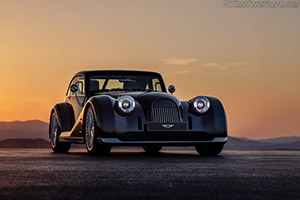
<< Prev Page 3 of 3  Creating a fixed-head interpretation of Midsummer required significant structural development and a fundamentally new approach to body integration. The introduction of a fixed-head design created opportunities to increase structural rigidity while also demanding new engineering and construction solutions. Creating a fixed-head interpretation of Midsummer required significant structural development and a fundamentally new approach to body integration. The introduction of a fixed-head design created opportunities to increase structural rigidity while also demanding new engineering and construction solutions.Central to this was the development of a new structural architecture incorporating billet-machined aluminium A-pillars, bonded structural glazing and countersunk riveted construction. The A-pillars carry roof loads into the front structure while providing precise mounting points for the doors and side-window system. Together, these elements allow the roof structure and glazing to contribute to the overall rigidity of the vehicle, increasing stiffness compared with the underlying Midsummer and Supersport architecture. The fixed-head structure was engineered so that each major element performs multiple functions. The roof forms part of a stressed-skin construction, increasing rigidity while enhancing the vehicle’s distinctive proportions and everyday usability. Despite the addition of the fixed roof structure, Midsummer Coupé remains remarkably light, weighing just 2.5% more than a Supersport fitted with a hardtop. Unlike other Morgan sports cars, where a rubber seal retains the glazing, the windscreen on Midsummer Coupé is bonded directly to the aluminium body structure. This allows the glass to contribute to the vehicle’s rigidity, helping distribute loads more evenly through the aluminium structure and reducing peak stresses in key areas by around 50%. The fixed glass roof is also bonded directly into the aluminium structure, allowing it to contribute to stiffness and load distribution as part of the fixed-head architecture. This approach reflects the broader engineering philosophy behind Midsummer Coupé, where each major component is designed to support multiple objectives, whether structural performance, refinement or usability. The side-window system was developed specifically for the fixed-head body, increasing refinement while contributing to the rigidity of the upper structure. Instead of the detachable sidescreens used on other Morgan sports cars, Midsummer Coupé features drop windows. An outer glass section, approximately 100mm wide, forms part of the side-window assembly, allowing the drop glass to sit within the overall glazed area while preserving the slim profile of the door and the purity of the fixed-head silhouette. The CXV-Generation bonded-aluminium platform provided the foundation for the project. Developed to support Morgan’s latest generation of sports cars, its strength, low mass and inherent flexibility created the opportunity to explore an entirely new fixed-head architecture whilst retaining compatibility with the BMW B58 'O1' powertrain — as featured in Morgan’s recently launched Supersport 400 model. The platform’s advanced construction allowed the new upper body structure to be integrated without compromising the lightweight philosophy that defines every Morgan. This combination of structural capability and design freedom enabled the development of a vehicle that remains true to Morgan’s core principles whilst exploring new levels of refinement, usability and engineering sophistication. Engineering and design are closely integrated throughout Midsummer Coupé. Every major structural element was developed not only to satisfy technical requirements, but also to support the vehicle’s proportions, character and intended use. The result is a car in which architecture, aesthetics and function are inseparable. Midsummer Coupé represents a significant development in Morgan’s coachbuilding expertise, bringing together the skills, materials and manufacturing techniques behind some of the company’s most individual commissions. Creating each of the nine vehicles requires a hybrid manufacturing approach that combines traditional craft with advanced engineering and production methods. At the heart of the project is a centre body hand-formed from flat aluminium sheet. Morgan’s craftsmen and women use English wheels to shape the material with the precision required to create highly resolved surfaces that require only minimal finishing prior to paint. Each body requires hundreds of hours of hand-forming and preparation, reflecting the intensive nature of the process. Unlike a traditional decorative body panel, the aluminium skin of Midsummer Coupé forms part of the car’s structure. This means every panel must be shaped with exceptional precision, balancing the requirements of both craftsmanship and engineering. Craftspeople wheel the panels with sufficient accuracy to minimise body filing and material removal, preserving the thickness required for the stressed-skin construction whilst maintaining the quality of the finished surface. The stressed aluminium panels operate well within material limits, with peak loads reaching approximately 30% of the material’s yield strength. This margin allows the panels to perform a structural role, yet remain suitable for the hand-forming techniques that define Morgan coachbuilding. Delivering the car’s extensive double-curvature surfaces and highly complex handmade structures requires a combination of traditional fabrication skills and modern joining techniques. Morgan’s craftsmen and women use TIG welding without filler material to achieve exceptional accuracy and a clean surface finish. Where riveting is required, solid aluminium rivets are double-countersunk into the skin, creating the potential for a near-seamless finish, preserving the integrity of the structure. The use of solid aluminium rivets combines a technique dating back to pre-war aircraft manufacturing with the precision required for a contemporary stressed-skin vehicle. Together, these methods allow complex forms to be created with the material honesty and attention to detail that define Morgan coachbuilding. Digital scanning and laser measurement are utilised throughout assembly, allowing the handmade structure to be checked continuously against the CAD reference. Each Midsummer Coupé body is assembled on a precision surface table that is laser-scanned to ensure an accuracy of 0.3mm across its length. This approach allows components to be refined throughout assembly yet still maintaining alignment to the digital model. Digital measurement provides the reference, but the final surface quality relies on the judgement and experience of Morgan’s artisans, who refine each panel by eye against templates and reference forms. The creation of each Midsummer Coupé brings together the expertise of craftspeople, engineers and specialists across Morgan Motor Company, reflecting the collaborative nature of the project and the breadth of skills required to realise each commission. The car’s wooden body frame also forms part of the load-bearing structure, combining laminated wheel arches, machined ash and high-strength components to help transfer loads from the lower structure into the aluminium body and roof. The use of wood also brings an acoustic benefit, with its natural damping properties helping to reduce aluminium panel resonance. In this way, the fixed-head structure brings together aluminium, glass and wood within a single load path, reflecting Morgan’s ability to apply traditional materials in a contemporary engineering context. It is an approach that could only come from a company whose understanding of these materials has been developed and refined over generations. Inside the cabin, handmade laminated wood panels, constructed from multiple veneers each approximately 0.6mm thick, are hand-fitted to every vehicle. Carefully controlled light lines allow concealed illumination to reveal the depth and character of the material. Each laminated component is matched to the surrounding bodywork and trim, reinforcing the level of craftsmanship required throughout the project. The project also supports Morgan’s continued investment in specialist coachbuilding, creating opportunities for the next generation of craftsmen and women to develop their expertise alongside experienced colleagues. Across the programme, countless hours will be dedicated to training, development and knowledge transfer, helping ensure these skills continue to evolve. Beyond the nine commissions themselves, Midsummer Coupé provides a framework for the considered exploration of techniques and processes that may inform future Morgan products, demonstrating how the company’s coachbuilding expertise continues to evolve. The application of the Pininfarina Fuoriserie emblem is a significant detail, positioned behind the front wheels as an immediate expression of Midsummer Coupé’s unique status. Vehicles designed by Pininfarina typically feature the ‘Design by Pininfarina’ emblem. For Midsummer Coupé, Pininfarina has again selected its ‘Fuoriserie’ brand mark, reflecting the distinctive nature of the project and the collaborative approach behind its creation. Meaning ‘out of series’, Fuoriserie denotes a vehicle produced beyond conventional production programmes. Its application to Midsummer Coupé continues a relationship first established with Midsummer, reinforcing the model’s position as a highly individual commission created through the combined expertise of Morgan and Pininfarina. The client sits at the centre of each Midsummer Coupé commission. Every project begins with a highly personal brief and develops through an ongoing dialogue between the client and Morgan. Beyond the shared body architecture, each of the nine commissions will be materially distinct. Morgan’s design team works closely with each client to develop a cohesive vision across colours, leathers, wood finishes and bespoke details, ensuring every vehicle reflects the personality and preferences of its owner. This one-to-one creative process allows Morgan to develop a deep understanding of each client’s aspirations, translating them into tailored details and individual interpretations of the vehicle. The result is a collection of cars that share a common foundation, yet are entirely unique in their execution. Morgan’s special projects programme builds upon the company’s longstanding tradition of creating highly exclusive, low-volume commissions and one-off vehicles. It provides a framework through which deeply personal projects can be conceived and realised in close collaboration with clients. Operating alongside Morgan’s production vehicle programmes, special projects create opportunities to explore ideas, materials and manufacturing techniques that may not be possible within a traditional production environment. In doing so, they help develop the skills, knowledge and expertise that underpin both current and future Morgan vehicles. Midsummer Coupé demonstrates the potential of this approach, bringing together contemporary coachbuilding, advanced engineering and individual commissioning within a single project, whilst providing a glimpse of what future special projects may become. Midsummer Coupé brings together the central principles of Morgan’s special projects programme: contemporary coachbuilding, craftsmanship and close client collaboration. The prototype revealed today establishes the reference point for the nine commissions that follow, each one developed in close partnership with its owner. Morgan will shortly begin handcrafting the first client commission, with further details of each vehicle to be revealed in due course. The prototype will join the Louwman Collection in The Hague, where it will be displayed as part of one of the world's most significant collections of historic automobiles. Its inclusion reflects the importance of the project as a contemporary expression of coachbuilding and provides the public with an opportunity to experience the vehicle before the first of the nine client commissions begins taking shape at Morgan's Pickersleigh Road workshops. Together, the nine commissions represent the next chapter in Morgan’s approach to bespoke vehicle creation, demonstrating how the company’s coachbuilding tradition continues to evolve whilst remaining true to its core principles. << Prev Page 3 of 3 |
| Article | Image gallery (30) | Specifications |
| All Cars - Contact us - Privacy Statement - Top | © 1998 - 2026 Ultimatecarpage.com |