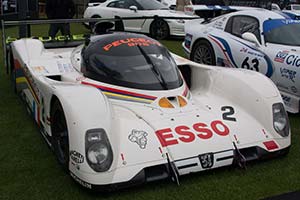
 Completed in 1990, this was the very first Peugeot 905 built. It served mainly as a test and development car and clocked many miles at Montlhery, Paul Ricard and the Le Mans Bugatti tracks. Later in the year, it served as the T-Car during the final two rounds of the World Ch>>>
|
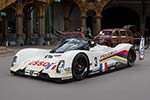 The second 905 produced, this car's career spawned the better part of four seasons. It debuted at Montreal in 1990 and during the subsequent years benefited from all the subsequent evolutions. In 1991, it served as a spare car at Le Mans, while it returned to racing in 1992,>>>
|
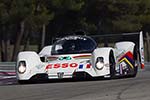 The first new 905 built for the 1991 season, chassis EV13 served predominantly as a T-car during the remainder of Peugeot sports car racing program. For the 1992 24 Hours of Le Mans, it was especially prepared for qualifying and in the hands of Philippe Alliot set a superb p>>>
|
 Entered at for Keijo Rosberg and Yannick Dalmas, this 905 debuted at the April 1991 Suzuka round of the World Championship. The Finnish/French pairing qualified second but an engine failure prompted an early retirement. The car retired again with engine issues at Monza and t>>>
|
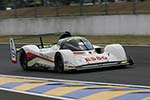 Built new for the 1991 season chassis EV15 was campaigned throughout the year. It scored a debut victory at Suzuka and later in the year won the World Championship rounds at Magny Cours and Mexico. At Le Mans, it set the second fastest time in qualifying but was eventually f>>>
|
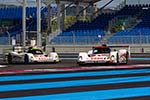 Chassis EV16 was one of two new cars built for the 1992 season. Piloted by Philippe Alliot, Mauro Baldi and Jean-Pierre Jabouille, it finished third at Le Mans behind the winning sister car and one of the Toyotas. Later in the season, it was driven to victories in the World >>>
|
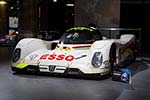 The seventh and final first generation 905 built, this example debuted at the 1992 Monza 1000 km. Derek Warwick and Yannick Dalmas used it to qualify on pole but failed to reach the finish. For Le Mans, Warwick and Dalmas were joined by Mark Blundell. Starting second, they e>>>
|

 Ultimatecarpage.com
> Cars by brand
> France
> Peugeot
Ultimatecarpage.com
> Cars by brand
> France
> Peugeot
 Racing cars
> Group C / IMSA GTP
Racing cars
> Group C / IMSA GTP