<< Prev Page 2 of 2 Infuriated by Shelby's decision, De Tomaso named the Vallelunga replacement Mangusta, Latin for Mongoose; a cat like carnivore capable of eating King Cobras. The Mangusta's chassis was virtually identical to the one shown at the Turin Auto Show. Ghia's chief designer Giorgietto Giugiaro penned a very aggressive, yet elegant coupe body. To add further strength to the chassis, most of the body was constructed from steel with the exception of non load bearing panels like the doors and engine covers, which were executed in aluminium. Access to the engine compartment was slightly unusual; through two gull-wing engine covers. The prototype Mangusta was shown at the 1967 Turin Show. In slightly modified form the Vallelunga replacement rolled off the production line not much later.
Giugiaro's fabulous styling could not hide the Mangusta's shortcomings. Yes the 300+ bhp V8 had moved the Mangusta in supercar territory, but it also put more emphasis on the inharent weakness of the backbone chassis. The 32/68 weight distribution did not help the handling much either. An even bigger problem was that space in the cockpit came at a premium, making it too cramped for Northern Europeans and most importantly for most Americans. Nevertheless, the sharply priced Mangusta was in demand and eventually more than 400 examples were produced. The ever stricter American safety and emissions regulations forced DeTomaso to built a slightly revised version for that market, powered by a 230 bhp V8.
Today often forgotten or bashed for its poor handling characteristics, the Mangusta was a vital piece in DeTomaso's history. It established the Italian company as a supercar manufacturer and was the start of a close relationship with Ford, which enabled DeTomaso to develop the Pantera. Having learned his lessons, De Tomaso lured away Gian Paolo Dallara from Lamborghini to design the Pantera's steel monocoque chassis. It is estimated that about half of the original produced Mangustas still exist today. << Prev Page 2 of 2

 Ultimatecarpage.com
> Cars by brand
> Italy
> DeTomaso
Ultimatecarpage.com
> Cars by brand
> Italy
> DeTomaso
 Mangusta
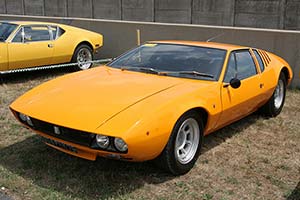
 Infuriated by Shelby's decision, De Tomaso named the Vallelunga replacement Mangusta, Latin for Mongoose; a cat like carnivore capable of eating King Cobras. The Mangusta's chassis was virtually identical to the one shown at the Turin Auto Show. Ghia's chief designer Giorgietto Giugiaro penned a very aggressive, yet elegant coupe body. To add further strength to the chassis, most of the body was constructed from steel with the exception of non load bearing panels like the doors and engine covers, which were executed in aluminium. Access to the engine compartment was slightly unusual; through two gull-wing engine covers. The prototype Mangusta was shown at the 1967 Turin Show. In slightly modified form the Vallelunga replacement rolled off the production line not much later.